Blog
Why Lord Hanuman Took the Panchmukhi Form and the Significance of Each Face

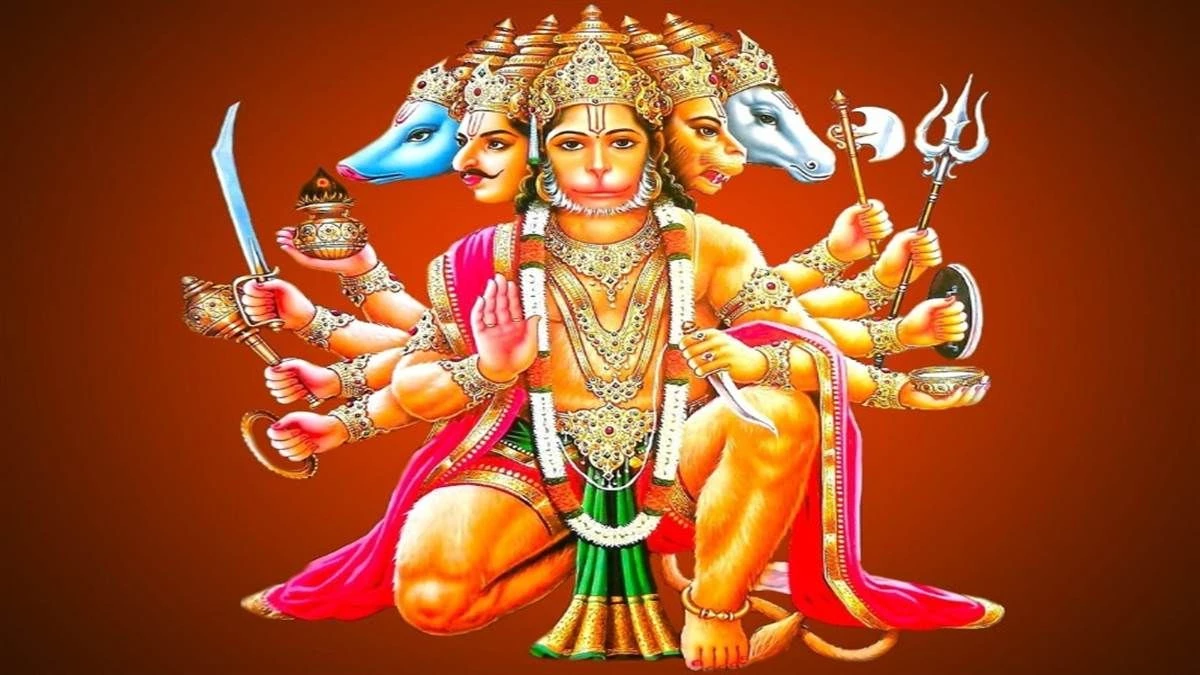
According to the Vedic calendar, Hanuman Jayanti is being celebrated across the country today, April 12, with great devotion and enthusiasm. On this sacred occasion, temples dedicated to Lord Hanuman are beautifully decorated, and special prayers are offered. One unique and spiritually significant form worshipped on this day is the Panchmukhi Hanuman, or the five-faced manifestation of Lord Hanuman. But what is the reason behind this divine form? Here is an in-depth look at the legend and the importance of each face in the Panchmukhi avatar.
The Story Behind the Panchmukhi Avatar
As per Hindu mythology, the story of Panchmukhi Hanuman is connected to the war between Lord Rama and the demon king Ravana in the Ramayana. When Ravana realized that his army was losing the battle, he sought help from Ahiravan, a powerful sorcerer and devotee of Goddess Bhavani, who was well-versed in the dark arts.
Ahiravan used his mystical powers to put Lord Rama’s army into a deep sleep and abducted both Lord Rama and his brother Lakshmana, taking them to the underworld (Patal Lok). There, Ahiravan prepared for a sacrificial ritual, lighting five lamps in five different directions. According to a divine boon, he could only be killed if all five lamps were extinguished simultaneously.
To rescue Lord Rama and Lakshmana, Lord Hanuman assumed the Panchmukhi form, which allowed him to extinguish all five lamps at once and defeat Ahiravan. This heroic act not only saved the brothers but also established the significance of this unique avatar. The Panchmukhi form is described in various versions of the Ramayana and holds deep spiritual meaning.
Significance of Each Face in the Panchmukhi Hanuman Form
1. Vanara (Monkey) Face – East Direction
This is the original face of Lord Hanuman, facing the east. It represents courage and strength and is believed to bestow victory over enemies.
2. Garuda (Eagle) Face – West Direction
The Garuda face faces west and is symbolic of protection from evil influences and obstacles. Worshipping this face is said to remove hindrances from one’s life.
3. Varaha (Boar) Face – North Direction
The Varaha face faces north and is associated with health and longevity. It is believed that worshipping this face grants a long and healthy life.
4. Narasimha (Lion-Man) Face – South Direction
The Narasimha face faces south and is a fierce manifestation that helps eliminate fear, stress, and negativity from one’s life.
5. Hayagriva (Horse) Face – Upward Direction
The upward-facing Hayagriva face represents knowledge and spiritual enlightenment. It is believed that praying to this form fulfills the devotee’s deepest desires.
The Panchmukhi Hanuman avatar is not only a symbol of immense strength and divine protection but also a spiritual guide to overcoming the five major directions of negativity. Each face of this divine form holds profound meaning, helping devotees conquer fear, remove obstacles, attain knowledge, and fulfill their aspirations. Worshipping Panchmukhi Hanuman, especially on the occasion of Hanuman Jayanti, is believed to bring peace, prosperity, and protection into one’s life.