Blog
Jagannath Rath Yatra 2026: Divine Celebrations, Sacred Traditions and Spiritual Significance from 16 to 27 July

Jagannath Rath Yatra is one of the grandest and most revered festivals of Sanatan Dharma, celebrated with immense devotion by millions of devotees across India and around the world. More than a religious procession, it is a divine celebration of devotion, equality, compassion, selfless service, and the eternal bond between the Lord and His devotees. Held annually in the sacred city of Puri, Odisha, the festival marks the ceremonial journey of Lord Jagannath, His elder brother Lord Balabhadra, and His sister Devi Subhadra.
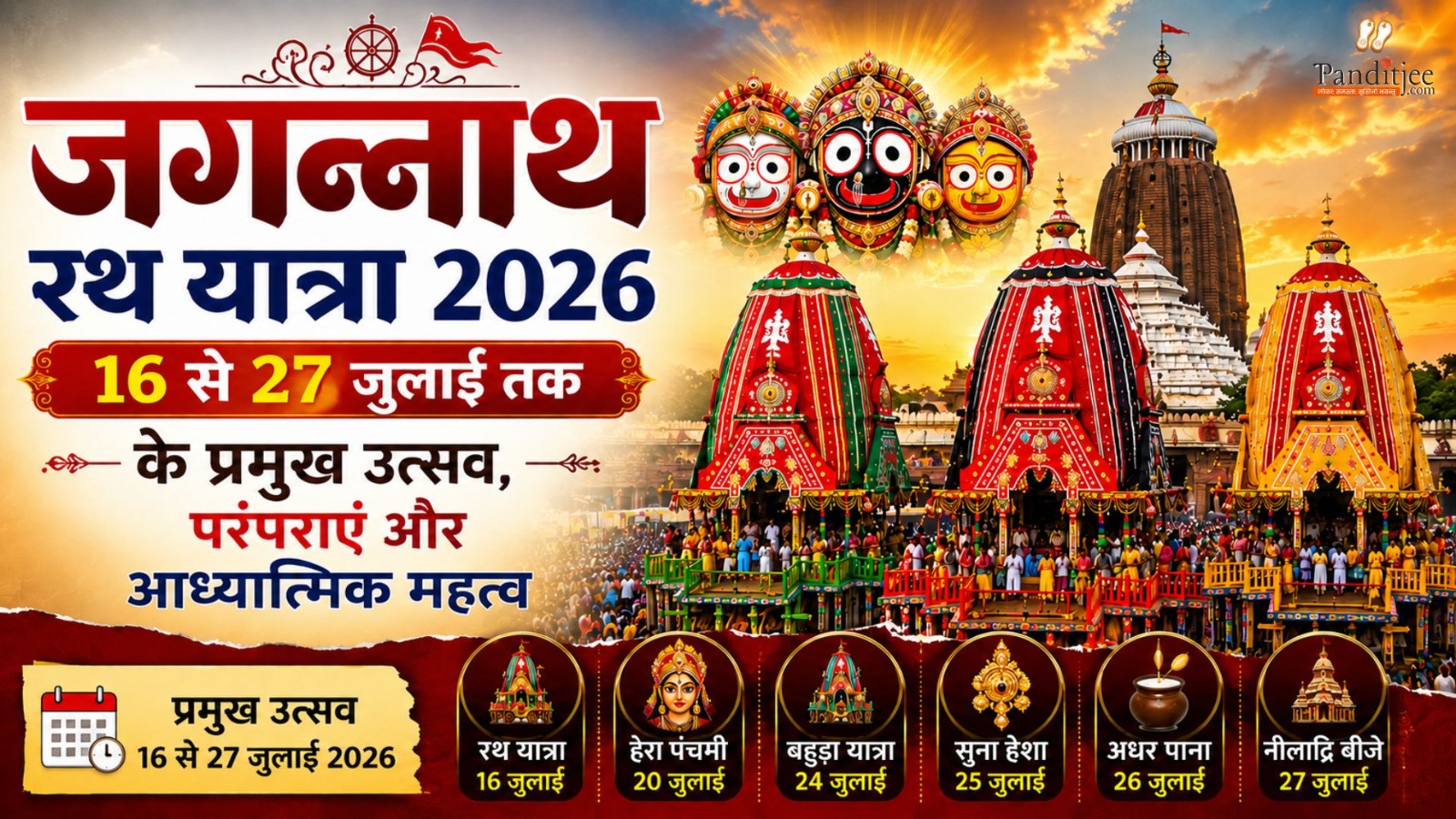
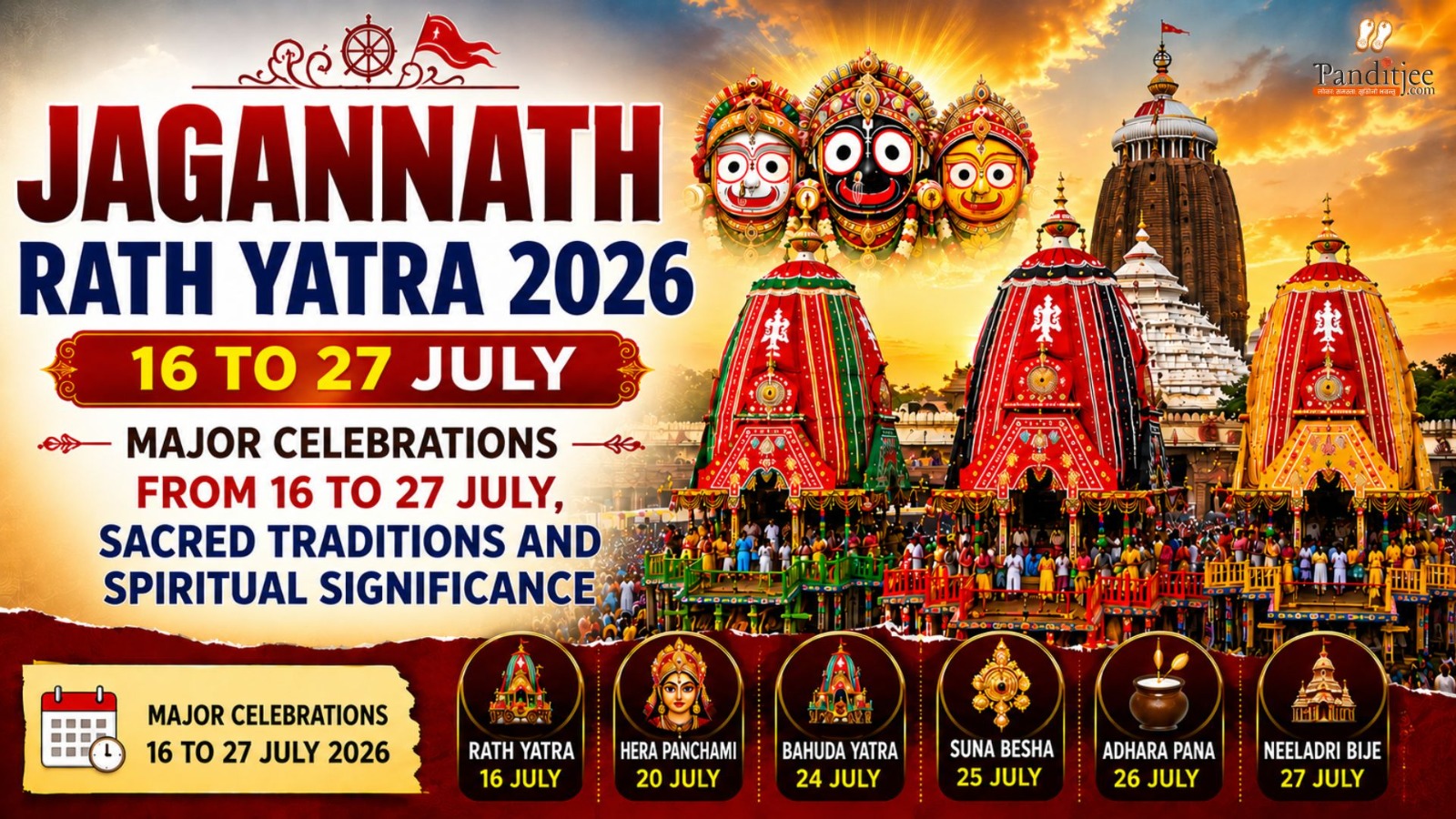
In 2026, the grand Jagannath Rath Yatra will commence on 16 July, while the major religious ceremonies and traditional observances associated with the festival will continue until 27 July 2026. During this sacred period, devotees will witness important celebrations such as Hera Panchami, Bahuda Yatra, Suna Besha, Adhara Pana, and Niladri Bije, each reflecting the timeless traditions and profound spiritual wisdom of Sanatan Dharma.
What is Jagannath Rath Yatra?
The word “Jagannath” means “Lord of the Universe.” In the Vaishnava tradition, Lord Jagannath is worshipped as the universal form of Lord Krishna. Every year, on the auspicious occasion of Ashadha Shukla Dwitiya, Lord Jagannath, Lord Balabhadra, and Devi Subhadra embark on a magnificent chariot procession from the sacred Jagannath Temple to the Gundicha Temple.
This sacred journey symbolizes the Lord stepping out of His temple to bless every devotee without distinction. Even those who cannot enter the sanctum of the temple receive the opportunity to have His divine darshan. For this reason, Jagannath Rath Yatra is regarded as a festival of equality, inclusiveness, and universal welfare.
Religious and Mythological Significance
Jagannath Rath Yatra is one of the oldest living traditions of Sanatan Dharma and finds mention in several sacred scriptures, including the Skanda Purana, Brahma Purana, and various Vaishnava texts.
According to traditional beliefs, Lord Jagannath visits the Gundicha Temple, affectionately regarded as His aunt’s abode, once every year and resides there for a few days before returning to the main temple.
Another popular legend states that Devi Subhadra expressed her desire to tour the city with her brothers, Lord Krishna and Lord Balarama. To fulfill her wish, the three divine siblings set out together on magnificent chariots. This sacred event is believed to have inspired the annual tradition of the Jagannath Rath Yatra.
The festival also conveys a profound spiritual message that the Divine belongs to everyone and showers blessings equally upon all, irrespective of caste, status, or background.
The Three Sacred Chariots
Three magnificent wooden chariots are specially constructed every year following centuries-old traditions and sacred rituals. The construction begins on the auspicious occasion of Akshaya Tritiya, and hereditary artisans continue this divine service with unwavering devotion.
Nandighosha is the chariot of Lord Jagannath and symbolizes divine compassion, wisdom, and universal welfare.
Taladhwaja is the chariot of Lord Balabhadra and represents strength, courage, stability, and righteousness.
Darpadalana (Devadalana) is the chariot of Devi Subhadra and signifies compassion, harmony, maternal grace, and balance.
Jagannath Rath Yatra 2026: Major Celebrations from 16 to 27 July
16 July 2026 – Rath Yatra
On the auspicious day of Ashadha Shukla Dwitiya, Lord Jagannath, Lord Balabhadra, and Devi Subhadra begin their sacred journey from the Jagannath Temple to the Gundicha Temple. Before the procession starts, the revered ritual of Chhera Pahanra is performed, during which the Gajapati Maharaja of Puri ceremonially sweeps the chariots with a golden broom. This beautiful tradition symbolizes humility and reminds everyone that all are equal before the Lord.
20 July 2026 – Hera Panchami
Hera Panchami is celebrated a few days after the Rath Yatra. On this occasion, Goddess Mahalakshmi symbolically visits the Gundicha Temple to meet Lord Jagannath. This sacred ritual beautifully represents divine love, respect, and the eternal bond between Lord Jagannath and Goddess Lakshmi.
24 July 2026 – Bahuda Yatra
After completing their stay at the Gundicha Temple, the deities begin their return journey to the Jagannath Temple. This homecoming procession is known as Bahuda Yatra. During the return journey, the deities stop at the Mausi Maa Temple, where special offerings are presented. Like the main Rath Yatra, Bahuda Yatra is celebrated with immense devotion and enthusiasm.
25 July 2026 – Suna Besha
The day after Bahuda Yatra, Lord Jagannath, Lord Balabhadra, and Devi Subhadra are adorned with magnificent gold ornaments in the sacred ritual known as Suna Besha. The dazzling golden attire of the deities attracts millions of devotees and is considered one of the most spectacular events of the entire festival.
26 July 2026 – Adhara Pana
Adhara Pana is one of the unique and sacred rituals of the Jagannath tradition. On this day, a specially prepared sacred sweet drink is ceremonially offered to the deities in large earthen vessels. According to traditional beliefs, this offering is dedicated to the Lord’s divine attendants and celestial beings who serve Him throughout the festival.
27 July 2026 – Niladri Bije
The grand festival concludes with Niladri Bije, marking the return of the deities to the sanctum of the Jagannath Temple. According to tradition, Goddess Mahalakshmi playfully stops Lord Jagannath from entering the temple until He offers her Rasgulla as a gesture of love and reconciliation. This beautiful ritual symbolizes affection, forgiveness, harmony, and the importance of family values.
Sacred Traditions of Jagannath Rath Yatra
Jagannath Rath Yatra is much more than a grand chariot procession. It is a living celebration of Sanatan Dharma’s timeless traditions. The annual construction of new chariots, Pahandi procession, Chhera Pahanra, Gundicha Yatra, Bahuda Yatra, Suna Besha, Adhara Pana, and Niladri Bije together make this festival one of the world’s most extraordinary spiritual celebrations.
For devotees, pulling the sacred chariots is considered a rare blessing and an act of selfless devotion that symbolizes surrender to the Divine.
Spiritual Significance
Jagannath Rath Yatra teaches that the true path to God is built on devotion, humility, compassion, selfless service, and complete surrender. By stepping out of His temple to meet His devotees, Lord Jagannath reminds humanity that divine grace is available to everyone without discrimination.
Every ritual associated with the Rath Yatra reflects timeless spiritual values such as equality, kindness, forgiveness, service, love, and universal welfare. This is why the festival is celebrated not only in Odisha but also across India and in many countries around the world with deep faith and reverence.
Conclusion
Jagannath Rath Yatra 2026 is not merely a religious festival but a living expression of Sanatan Dharma’s rich spiritual heritage. From 16 to 27 July 2026, every celebration and ritual reflects the divine pastimes of Lord Jagannath, centuries-old traditions, and profound spiritual wisdom.
The festival inspires us to embrace love, equality, compassion, humility, and unwavering devotion in our daily lives. The sacred chariot of Lord Jagannath not only travels through the holy streets of Puri but also fills millions of hearts with faith, hope, and spiritual enlightenment.
For authentic information on Sanatan Dharma, Hindu festivals, fasting traditions, puja rituals, Panchang, Vedic astrology, temples, and spiritual practices, download the Panditjee.com App and enrich your spiritual journey with trusted guidance and timeless wisdom.