Blog
Guru Purnima 2026: A Sacred Celebration of Knowledge, Devotion and the Eternal Guru-Shishya Tradition

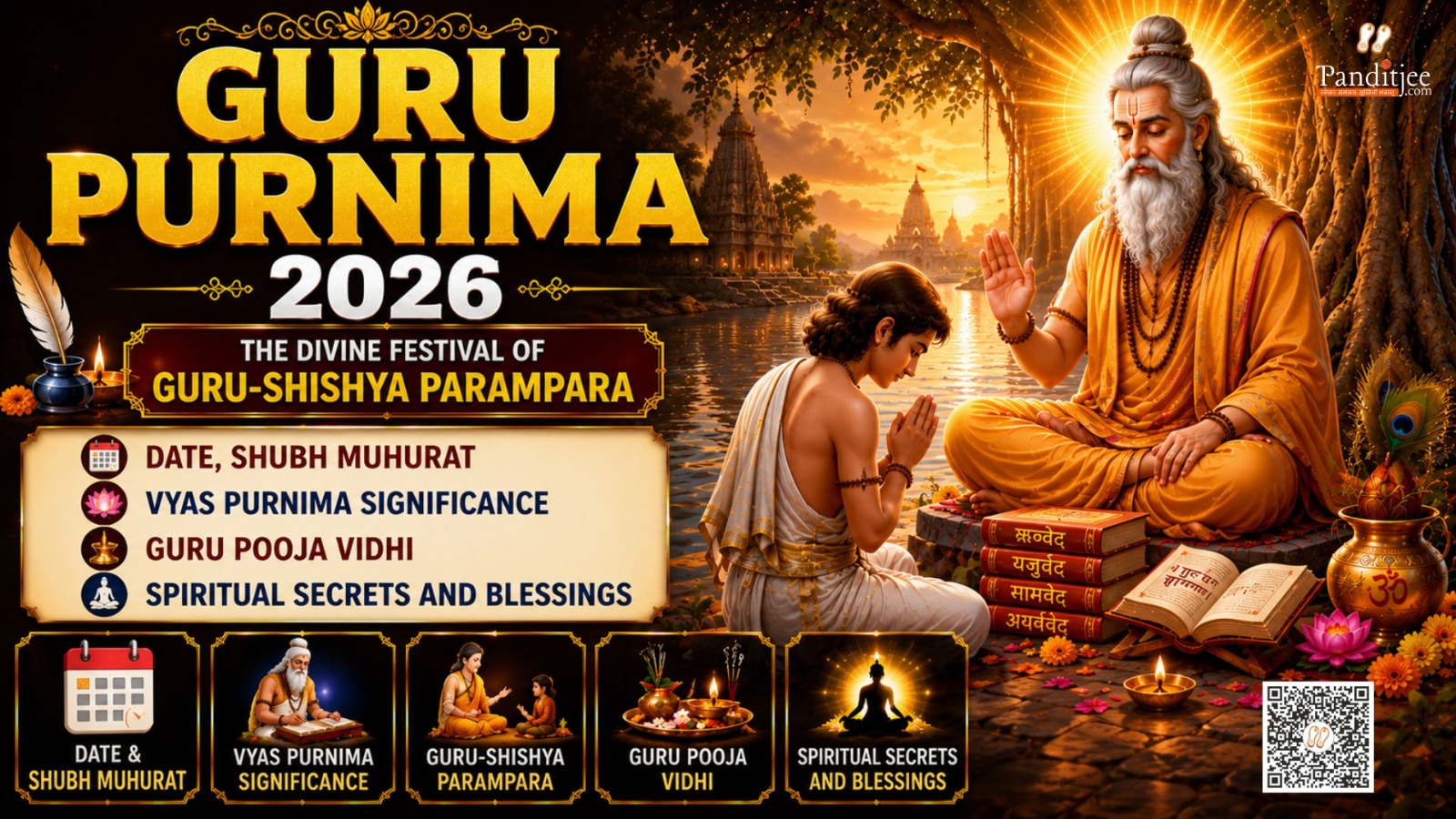
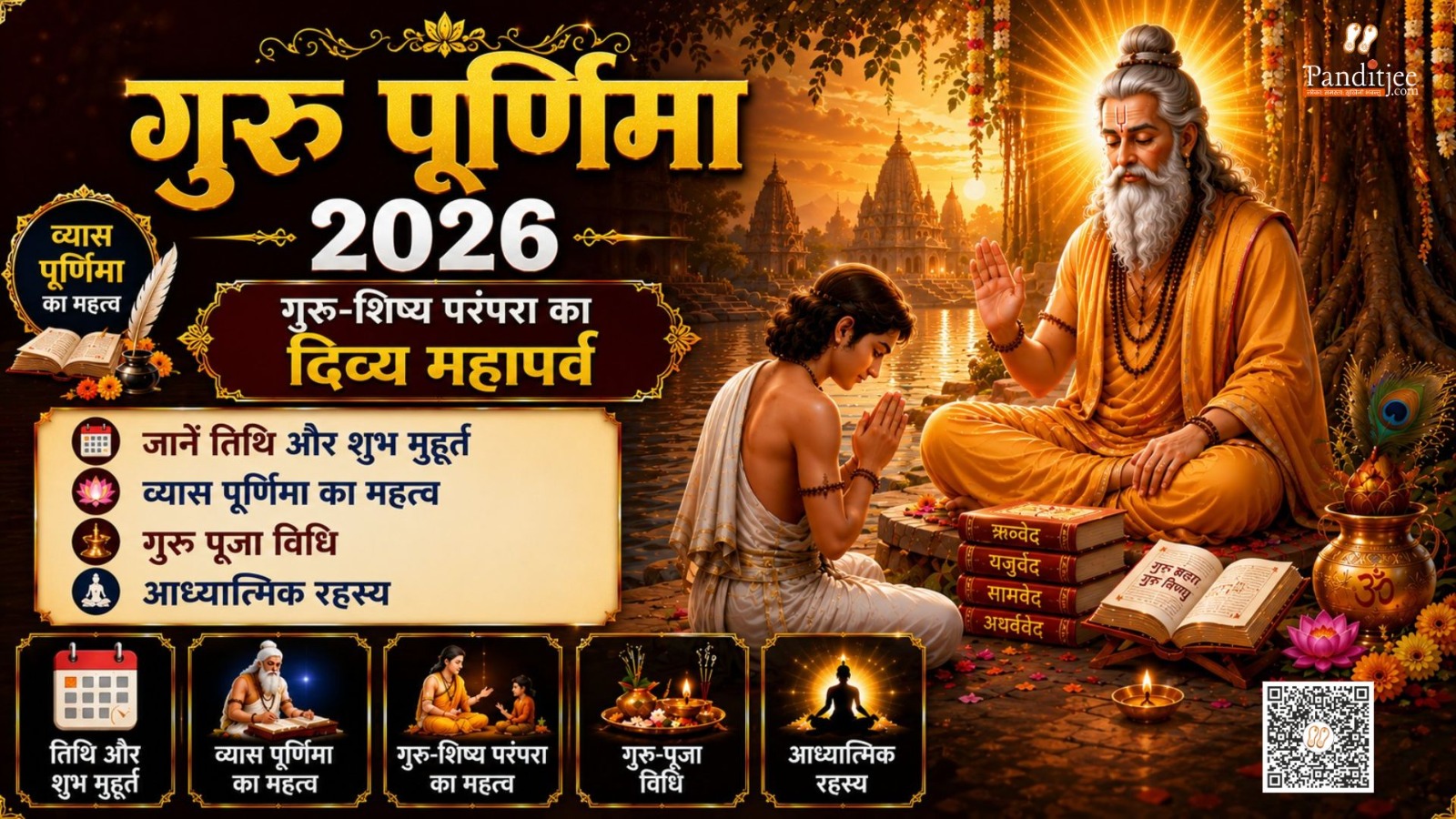
Among all festivals celebrated in Sanatan Dharma, Guru Purnima occupies a unique and deeply revered place because it is dedicated not to a deity alone, but to the living source of divine wisdom—the Guru. Celebrated every year on the sacred Full Moon of the Ashadha month, Guru Purnima reminds humanity that true knowledge is not merely acquired through study but is awakened through the grace of an enlightened teacher. Indian philosophy has always regarded the Guru as the bridge between the individual soul and the Supreme Consciousness. While parents bless us with birth, it is the Guru who gives direction to that life by removing ignorance and illuminating the path of righteousness, devotion and liberation.
The festival is also celebrated as Vyas Purnima, commemorating the birth anniversary of Maharishi Ved Vyasa, the immortal sage who compiled the four Vedas, authored the Mahabharata, composed the Brahma Sutras and preserved India’s spiritual heritage for future generations. Every spiritual lineage in Sanatan Dharma traces its roots to Maharishi Ved Vyasa, making this day an occasion not only to honour one’s personal Guru but also to pay homage to the eternal tradition of wisdom that has guided seekers for thousands of years.
In 2026, Guru Purnima will be observed on Wednesday, 29 July. According to the Vedic Panchang, the Purnima Tithi begins at 6:18 PM on 28 July and concludes at 8:05 PM on 29 July 2026. Since the Full Moon prevails during sunrise on 29 July, devotees across India and around the world will celebrate Guru Purnima on this day by performing Guru Puja, offering Guru Dakshina, chanting sacred scriptures and seeking blessings for knowledge, inner peace and spiritual progress.
Guru Purnima 2026 Date and Shubh Muhurat
According to the Hindu Panchang, Guru Purnima will be celebrated on Wednesday, 29 July 2026. The Purnima Tithi begins at 6:18 PM on 28 July and ends at 8:05 PM on 29 July 2026. The most auspicious time for Guru Puja is considered to be during the morning after sunrise, especially after completing one’s daily purification rituals. Brahma Muhurat is also regarded as highly sacred for meditation, mantra chanting and remembering one’s Guru with complete devotion.
Why is Guru Purnima Celebrated? Understanding Its Eternal Spiritual Significance
Guru Purnima celebrates one of the most profound truths of Sanatan Dharma—that knowledge is sacred only when it transforms life. The Sanskrit word Guru is formed from two syllables: Gu, meaning darkness, and Ru, meaning the remover. Thus, Guru is the one who removes the darkness of ignorance and awakens the light of self-knowledge.
Our scriptures describe the Guru as the visible manifestation of the Divine. The famous Guru Stotram proclaims:
“Guru Brahma, Guru Vishnu, Guru Devo Maheshwarah; Guru Sakshat Parabrahma, Tasmai Shri Gurave Namah.”
This sacred verse beautifully explains that the Guru embodies the creative wisdom of Brahma, the sustaining compassion of Vishnu and the transformative power of Mahadev. Ultimately, the Guru represents the Supreme Reality itself. Guru Purnima therefore becomes a day of surrender, gratitude and inner transformation rather than merely a ceremonial observance.
Why Maharishi Ved Vyasa is Worshipped on Guru Purnima
The spiritual significance of Guru Purnima becomes even deeper because it marks the birth anniversary of Maharishi Ved Vyasa, revered throughout India as the Adi Guru. His unparalleled contribution to preserving Sanatan Dharma cannot be measured. By dividing the Vedas into four parts, composing the Mahabharata, compiling the Puranas and writing the Brahma Sutras, he made profound spiritual knowledge accessible to humanity.
Without Maharishi Ved Vyasa, much of the wisdom contained in the Vedas and Puranas would not have reached later generations. Every spiritual teacher in the Guru Parampara honours him on this day as the source of India’s eternal knowledge tradition.
Guru Purnima Puja Vidhi: How to Worship Your Guru with Devotion
The observance of Guru Purnima begins before sunrise with a sacred bath and purification of both body and mind. Devotees decorate their prayer space, light a ghee lamp and invoke the blessings of their Guru and Maharishi Ved Vyasa. Flowers, sandalwood, fruits and sweets are offered with complete humility. Those fortunate enough to have their Guru physically present seek blessings by offering Guru Dakshina and touching the Guru’s feet, while others worship the Guru’s photograph or Padukas with equal devotion.
Recitation of Guru Gita, Bhagavad Gita, Vishnu Sahasranama and Vedic hymns is considered highly auspicious. Meditation upon the Guru’s teachings is regarded as the highest form of worship because true Guru Bhakti lies not merely in ritual offerings but in living according to the Guru’s wisdom.
The Spiritual Importance of Guru Purnima in Modern Life
In today’s world, where information is abundant but wisdom is increasingly rare, Guru Purnima carries an even deeper relevance. It reminds us that success without values is incomplete and knowledge without humility can never lead to fulfilment. A Guru teaches far more than academic learning; a true Guru transforms character, purifies the intellect and awakens compassion, discipline and self-awareness.
This sacred festival inspires every individual to pause, reflect upon life’s higher purpose and reconnect with timeless spiritual values. It encourages seekers to cultivate gratitude, simplicity, discipline and devotion while recognising the countless teachers, parents and mentors who have shaped their journey.
Guru Purnima 2026 is much more than a traditional festival; it is a celebration of divine wisdom, eternal knowledge and the sacred relationship between the Guru and the disciple. By honouring Maharishi Ved Vyasa, expressing gratitude to our Gurus and dedicating ourselves to spiritual practice, we continue a tradition that has illuminated humanity for thousands of years. Every prayer offered on this sacred Full Moon becomes an offering to knowledge itself, reminding us that the greatest blessing in life is not wealth or power but the guidance of a Guru who leads us from darkness to light, from ignorance to wisdom and from the transient world to the eternal truth.
For authentic and comprehensive information on Sanatan Dharma, Hindu festivals, vrat and fasting, pooja rituals, Panchang, Vedic astrology, temple traditions, mantras, sacred scriptures, and spiritual wisdom, download the Panditjee.com App. Stay connected with trusted Vedic knowledge, expert guidance, and timeless spiritual traditions to deepen your devotion and enrich your spiritual journey every day.