Blog
Krishna Janmashtami 2026: Why Lord Krishna’s Birth Matters? Know Its Religious Significance, Spiritual Meaning, Puja Rituals and Life Lessons

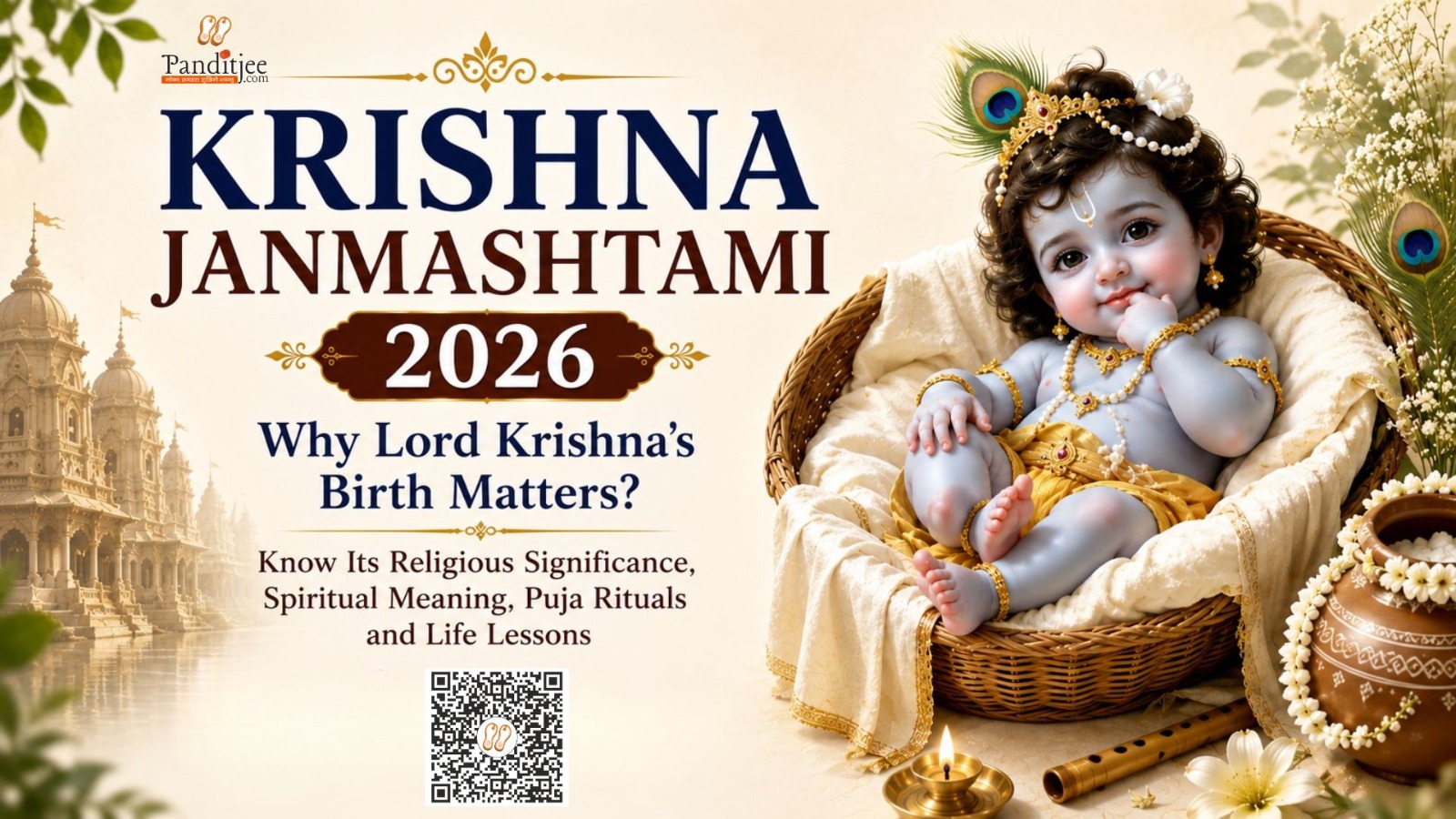
Krishna Janmashtami 2026: Krishna Janmashtami is one of the most sacred festivals in Sanatan Dharma, celebrated to mark the birth of Lord Krishna, regarded as the eighth incarnation of Lord Vishnu. Observed on the Ashtami Tithi of Krishna Paksha in the month of Bhadrapada, Janmashtami is not merely a celebration of Krishna’s birth. It represents the victory of dharma over adharma, light over darkness and wisdom over ignorance.
Lord Krishna’s life offers lessons on love, courage, duty, devotion, wisdom, compassion and the importance of maintaining balance in difficult situations. From his playful childhood in Gokul and Vrindavan to his role as Arjuna’s charioteer and spiritual guide in the Mahabharata, Krishna represents different dimensions of life and spirituality.
Krishna Janmashtami 2026: When is it celebrated?
Krishna Janmashtami 2026 will be celebrated on September 4, Friday. Devotees observe fasting, offer prayers, visit temples, sing Krishna bhajans and perform special rituals to celebrate the birth of Lord Krishna.
According to religious tradition, Krishna was born at midnight in a prison in Mathura to Devaki and Vasudeva. This is why midnight holds special significance during Janmashtami celebrations. Devotees traditionally perform the birth ceremony, offer prayers and celebrate Krishna’s arrival at midnight.
The exact puja and fasting timings can vary according to location and the local Panchang.
Why was Lord Krishna born?
According to Hindu scriptures and religious traditions, Lord Krishna appeared on Earth at a time when adharma and tyranny were increasing. King Kamsa of Mathura had become a symbol of oppression and fear.
A divine prophecy had warned Kamsa that the eighth child of his sister Devaki would become the cause of his downfall. He imprisoned Devaki and her husband Vasudeva and killed their children. Krishna was eventually born as Devaki’s eighth child.
According to tradition, Vasudeva carried the newborn Krishna across the Yamuna to Gokul, where he was raised by Nanda Baba and Yashoda.
The story of Krishna’s birth is therefore spiritually understood as the arrival of divine consciousness in the midst of darkness and the restoration of dharma in the face of adharma.
What is the spiritual significance of Janmashtami?
The spiritual meaning of Janmashtami goes beyond celebrating the historical or divine birth of Krishna. The festival encourages devotees to look within and overcome fear, ego, ignorance and negativity.
In spiritual traditions, Krishna is also associated with Ananda, or bliss. His personality combines love, wisdom, compassion, playfulness, devotion and duty.
From this perspective, spirituality does not necessarily mean withdrawing from the world. Krishna’s teachings encourage people to remain engaged in life while performing their responsibilities with awareness, wisdom and balance.
Krishna as a symbol of Ananda or bliss
The childhood stories of Krishna are filled with joy, playfulness and affection. His stories with the people of Gokul and Vrindavan, his love for music and his playful nature portray a form of divine joy.
Spiritual teacher Sri Sri Ravi Shankar has also described Krishna in terms of Ananda, or bliss. From this perspective, Janmashtami can become an opportunity to reflect on what genuine happiness means.
Modern life often keeps people occupied with achievement, competition and material goals. Krishna’s spiritual symbolism reminds devotees that inner joy cannot always be found through external success alone.
What does Kamsa symbolise spiritually?
The story of Krishna’s birth can also be interpreted symbolically. In one spiritual interpretation, Kamsa represents the ego, while Krishna represents bliss and higher consciousness.
Ego can appear in everyday life through excessive pride, constant comparison, fear, anger or an obsessive focus on personal desires. When these tendencies dominate the mind, a person can lose touch with inner peace and awareness.
The symbolic birth of Krishna therefore represents the emergence of wisdom and consciousness that can overcome the darkness created by ego and fear.
In this interpretation, Devaki is associated with the body, while Vasudeva represents prana, or life force. Krishna represents bliss and divine consciousness.
Bhagavad Gita: Krishna’s greatest spiritual message
One of the most important aspects of Krishna’s legacy is his teaching in the Bhagavad Gita.
On the battlefield of Kurukshetra, Arjuna became overwhelmed by confusion, fear and emotional conflict. Krishna guided him through teachings on duty, action, knowledge, devotion and detachment.
One of the central messages of the Gita is to focus on performing one’s duty without becoming excessively attached to the outcome.
This teaching remains highly relevant today. Whether it is career pressure, relationships, financial concerns or personal struggles, people often become anxious about results that are beyond their complete control.
Krishna’s teachings encourage people to focus on sincere effort, responsible action and the right course of conduct.
Krishna and the meaning of love
Lord Krishna is deeply associated with divine love and devotion. The Radha-Krishna tradition presents love as a profound spiritual connection rather than merely an emotional relationship.
Krishna’s relationship with Radha and his bond with the people of Vrindavan have become central to several devotional traditions. Through these traditions, love is understood as a path toward surrender, devotion and spiritual connection with the divine.
Krishna therefore represents a form of love that combines affection, devotion, trust and surrender.
Why are Krishna’s childhood stories important?
During Janmashtami, devotees particularly worship Bal Krishna, also known as Bal Gopal, Laddu Gopal and Nandlal.
Stories of Krishna stealing butter, playing with the children of Gokul and interacting affectionately with Yashoda are among the most beloved episodes of his childhood.
For devotees, Bal Krishna represents innocence, purity, happiness and unconditional love. This is why many families celebrate Janmashtami by decorating a cradle for the infant Krishna and symbolically welcoming him into their homes.
Janmashtami fasting and puja rituals
Devotees observe Janmashtami according to their family and regional traditions. Many people keep a fast during the day and spend the evening in prayer, meditation, devotional singing and Krishna remembrance.
At midnight, the traditional birth ceremony is performed. The idol or image of Bal Krishna is bathed with Panchamrit, dressed in new clothes and decorated with flowers.
Devotees offer tulsi leaves, butter, mishri, fruits and other traditional offerings to Lord Krishna. Bhajans, kirtans and aartis are also performed in homes and temples.
Many temples organise special decorations, Krishna Jhankis and devotional programmes on this occasion.
How should devotees celebrate Janmashtami?
Janmashtami can be celebrated through traditional rituals as well as personal spiritual reflection.
Devotees may observe a fast according to their health and family traditions, perform Krishna puja, chant devotional mantras, read the Bhagavad Gita, listen to Krishna bhajans and participate in temple celebrations.
However, the deeper purpose of the festival is to understand Krishna’s teachings and apply them in everyday life.
Practising kindness, fulfilling responsibilities honestly, controlling anger and ego, helping others and maintaining faith during difficult times can also become meaningful ways of observing the spirit of Janmashtami.
Why are Krishna’s teachings relevant today?
Modern life is often marked by stress, competition, uncertainty and constant pressure to succeed. Krishna’s teachings offer a framework for dealing with these challenges with greater balance.
His message encourages courage during difficult times, wisdom while making decisions, love in relationships, discipline in action and detachment from excessive anxiety about results.
Krishna also teaches that challenges cannot always be avoided. What matters is how we respond to them.
This makes his teachings relevant not only from a religious perspective but also as a source of spiritual reflection for everyday life.
The deeper message of Krishna Janmashtami
The most important message of Janmashtami is not simply that devotees should celebrate Krishna’s birth. It is also an invitation to understand what Krishna represents within human life.
When ego becomes dominant, Krishna represents awareness. When fear takes over, Krishna represents courage. When confusion clouds judgment, Krishna represents wisdom. When life becomes stressful, Krishna represents inner balance and bliss.
The festival therefore symbolises a journey from darkness to light, fear to courage, ego to awareness, confusion to wisdom and restlessness to inner bliss.
Krishna Janmashtami 2026 is an opportunity to celebrate the divine birth of Lord Krishna while reflecting on the deeper spiritual principles associated with his life and teachings.
Krishna’s story brings together devotion, love, wisdom, courage, duty and spiritual awareness. From the innocence of Bal Krishna to the profound teachings of the Bhagavad Gita, his life continues to offer meaningful lessons for people facing the challenges of everyday life.
This Janmashtami, celebrating Krishna can go beyond rituals and festivities. It can also become a moment to cultivate greater awareness, perform our duties sincerely, overcome ego and fear, and discover a deeper sense of love, peace and inner joy.
For authentic and comprehensive information on Sanatan Dharma, festivals, fasting traditions, puja rituals, Panchang, Vedic astrology, temples and spiritual wisdom, download the Panditjee.com App and enrich your spiritual journey with trusted knowledge and timeless traditions.