Blog
Kalki Jayanti 2026: August 18 Date, Puja Muhurat, Kalki Avatar Story, Vrat and Religious Significance

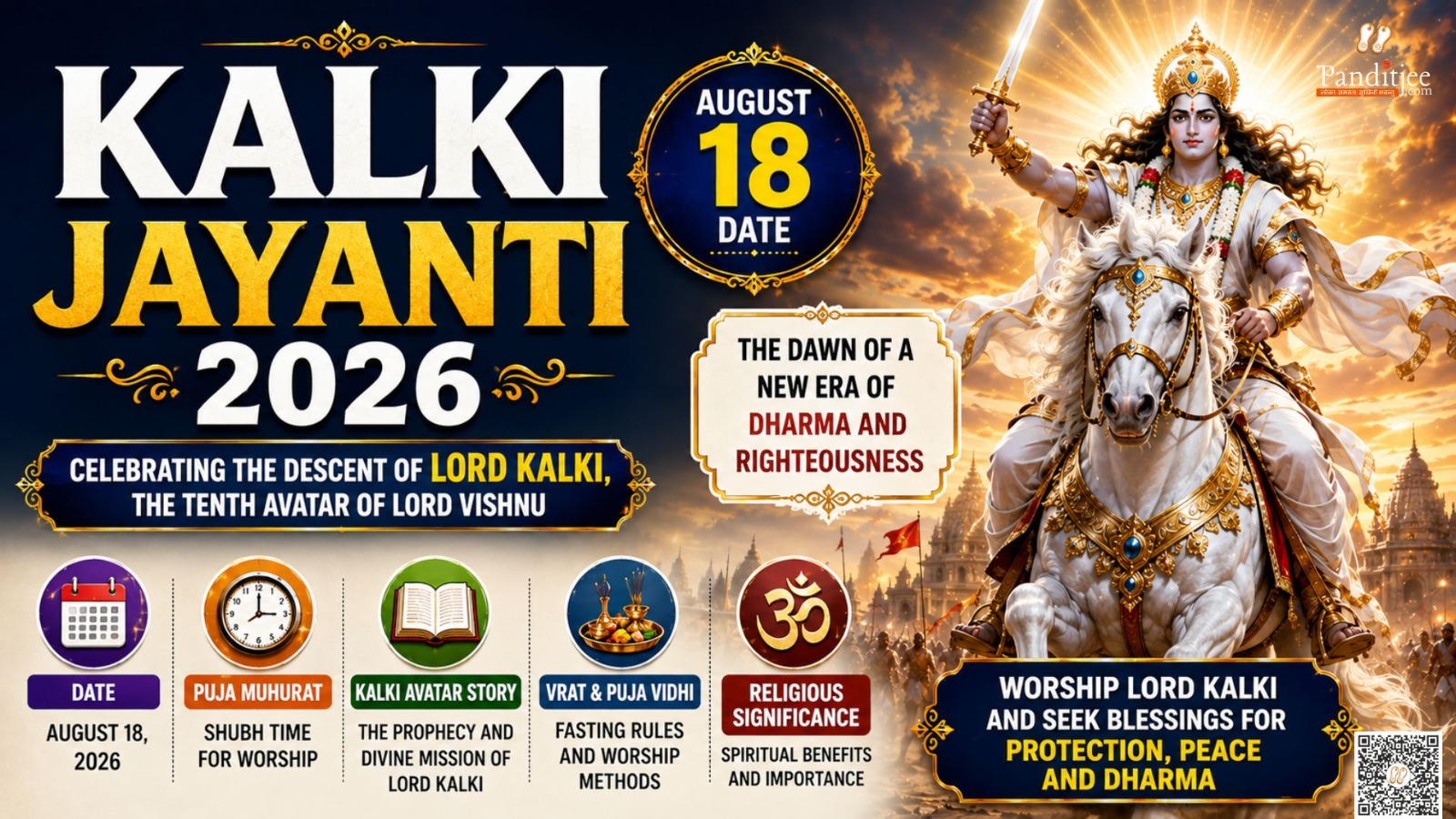
Kalki Jayanti 2026 is an important Hindu festival dedicated to Lord Kalki, traditionally regarded as the tenth and final avatar of Lord Vishnu. According to Hindu religious traditions, nine major avatars of Lord Vishnu have already appeared, while the Kalki avatar is believed to manifest in the future, at the end of Kali Yuga.
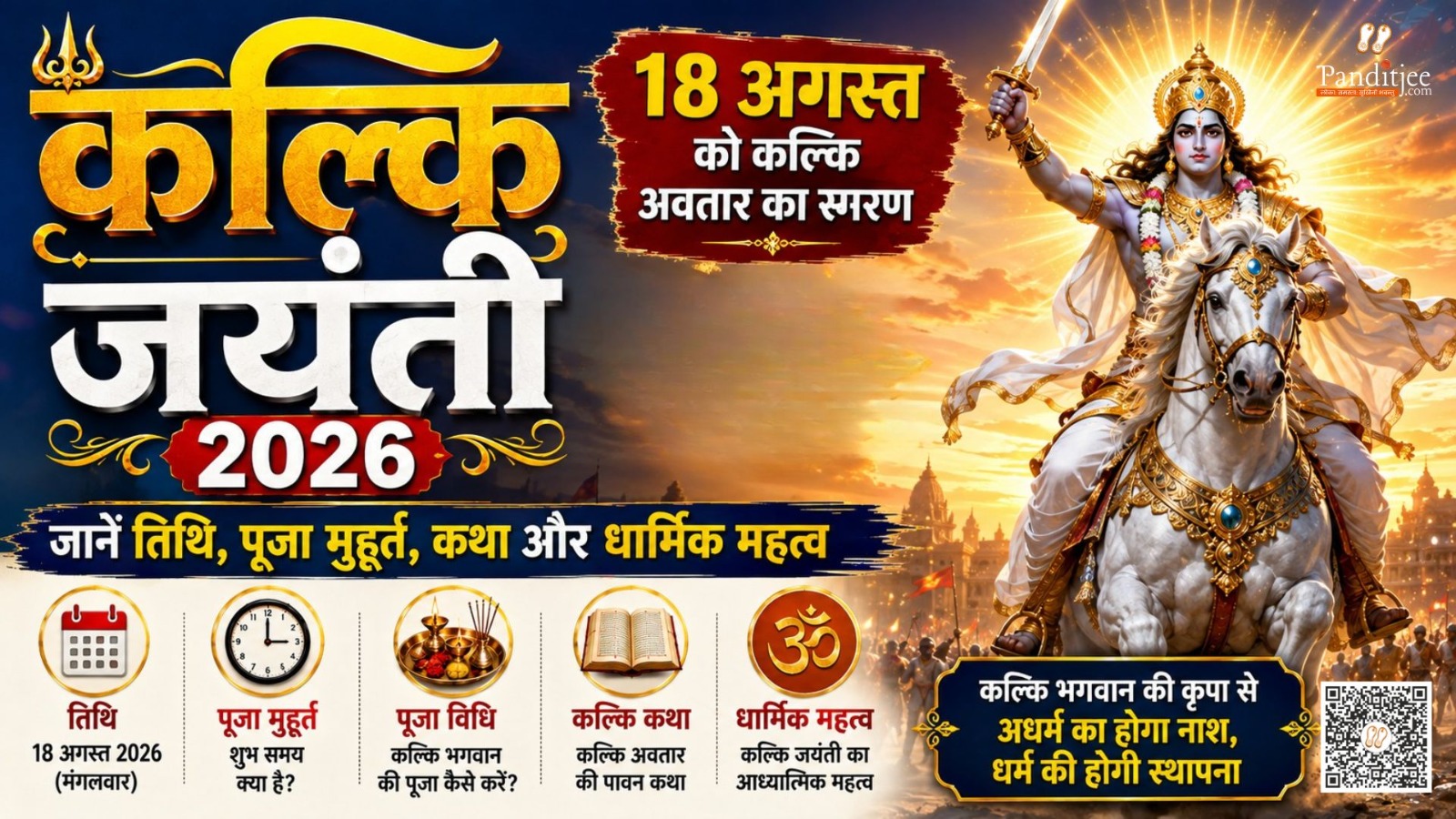
In 2026, Kalki Jayanti falls on Tuesday, August 18. Devotees observe the occasion through fasting, prayers, Vishnu worship, mantra chanting, Vishnu Sahasranama recitation and the study of sacred scriptures. The festival is associated with the restoration of dharma, the destruction of adharma and the eventual victory of truth and righteousness.
The principal account of Kalki’s future appearance is found in the Kalki Purana, while related references are also associated with the Vishnu Purana and Bhagavata Purana traditions.
Kalki Jayanti 2026 Date and Puja Muhurat
Kalki Jayanti is associated with the Shukla Paksha Shashthi Tithi of the Hindu lunar calendar. In 2026, the Shashthi Tithi is expected to begin at approximately 5:00 PM on August 17, 2026, and end at approximately 5:51 PM on August 18, 2026.
The available Panchang calculation places the Kalki Jayanti Puja Muhurat from approximately 4:21 PM to 5:50 PM on August 18.
Exact timings can vary according to the location and local Panchang calculations. Devotees should therefore check the Panchang applicable to their city before beginning the पूजा ritual.
On this day, devotees traditionally worship Lord Vishnu, observe a fast according to their family tradition, chant Vishnu mantras, recite Vishnu Sahasranama and listen to or read sacred texts associated with Lord Vishnu.
Who is Lord Kalki? The Tenth Avatar of Lord Vishnu
In Hindu tradition, Lord Vishnu is regarded as the preserver of the universe. According to religious belief, whenever dharma declines and adharma rises, Vishnu manifests in different forms to restore balance and protect righteousness.
The ten principal avatars of Vishnu are collectively known as the Dashavatara. They are traditionally identified as Matsya, Kurma, Varaha, Narasimha, Vamana, Parashurama, Rama, Krishna, Buddha and Kalki.
The distinctive feature of the Kalki avatar is that his appearance is believed to be yet to occur. Unlike the avatars associated with earlier ages, Kalki represents a future divine manifestation connected with the end of Kali Yuga.
For this reason, Kalki Jayanti is not simply a celebration of a historical birth. It represents faith in the eventual restoration of dharma, truth and righteousness.
Kalki Avatar Story: Birth in Shambhala
The story of Kalki’s future appearance is described primarily in the Kalki Purana. According to Hindu religious tradition, the final phase of Kali Yuga will be marked by a severe decline in morality and righteousness.
Truth will lose its importance, injustice will increase and people will increasingly move away from their moral and spiritual responsibilities. When adharma reaches its highest point, Lord Vishnu is believed to appear as Kalki.
According to the traditional account, Lord Kalki will be born in Shambhala, in the household of a Brahmin named Vishnuyasha and his wife Sumati.
His purpose will be to destroy adharma and restore righteousness. The story therefore represents not only the destruction of evil but also the beginning of a new period based on dharma and truth.
Lord Kalki and the White Horse Devadatta
Traditional descriptions portray Lord Kalki as a powerful divine figure riding a white horse named Devadatta.
He is described as carrying a divine sword, which is traditionally understood as a symbol of the destruction of adharma, injustice and ignorance.
According to religious belief, Kalki will travel across the world to confront corrupt and unrighteous forces. After the destruction of adharma, dharma will once again become established.
The religious tradition further connects the appearance of Kalki with the beginning of a new Satya Yuga, making the avatar a symbol of renewal, transformation and the restoration of cosmic balance.
What is the Connection Between Kali Yuga and Kalki Avatar?
Hindu cosmology traditionally divides time into four major Yugas—Satya Yuga, Treta Yuga, Dvapara Yuga and Kali Yuga.
Satya Yuga is traditionally associated with truth and righteousness, while Kali Yuga is described as an age in which dharma gradually declines and adharma increases.
According to Hindu religious belief, when Kali Yuga reaches its final stage and adharma becomes dominant, Lord Vishnu will appear as Kalki.
Therefore, Kalki is not merely considered a future avatar of Vishnu. He is also a powerful religious symbol of the victory of dharma over adharma, truth over falsehood and righteousness over injustice.
Meaning of the Name Kalki
The name Kalki is traditionally associated with the Sanskrit word Kalka, which is connected with impurity, defilement or darkness in religious interpretations.
From this perspective, Lord Kalki represents the divine force that removes impurity, adharma and destructive forces from the world.
The meaning also gives Kalki Jayanti a deeper spiritual dimension. Devotees can interpret the festival as an opportunity to overcome negative tendencies within themselves, including anger, greed, ego, dishonesty and harmful behaviour.
Kalki Jayanti 2026 Puja Vidhi
Devotees generally begin Kalki Jayanti by taking a bath early in the morning and wearing clean clothes. The पूजा area is cleaned and an image or idol of Lord Vishnu is placed for worship.
A दीपक is lit before the deity, followed by offerings of Tulsi leaves, flowers, fruits and traditional पूजा सामग्री. Devotees may chant Vishnu mantras and recite the Vishnu Sahasranama.
Reading or listening to passages from the Bhagavad Gita, Vishnu Purana or Kalki Purana can also form part of the spiritual observance.
Many devotees participate in Vishnu bhajans and kirtans, either at home or in temples. The पूजा concludes with Aarti and prayers for peace, prosperity, health and spiritual strength.
Ritual practices may differ between regions and families, so devotees can follow their established family traditions along with the guidance of their local Panchang.
Kalki Jayanti Vrat and Fasting Rules
Many devotees observe a fast on Kalki Jayanti. Traditionally, fasting is considered more than simply abstaining from food. It represents self-control, devotion, discipline and spiritual purification.
Some devotees observe a complete fast, while others follow a fruit-based or Sattvic diet. Fasting practices can vary according to family traditions, regional customs and individual circumstances.
People who cannot observe a strict fast for health-related reasons may follow a suitable Sattvic diet according to their physical capacity. The spiritual purpose of a fast is generally associated with sincerity, devotion and discipline rather than physical hardship.
Religious and Spiritual Significance of Kalki Jayanti
The central message of Kalki Jayanti is the eventual victory of dharma over adharma. The story of Lord Kalki reinforces the belief that injustice and darkness cannot continue forever.
The festival encourages devotees to remain patient and committed to righteousness even during difficult circumstances. The future appearance of Kalki represents the belief that when the balance between dharma and adharma is severely disturbed, divine intervention will restore order.
The story also carries a personal spiritual message. Instead of simply waiting for a future divine transformation, individuals can work towards creating positive change in their own lives by following truth, compassion, discipline and righteousness.
Overcoming anger, greed, ego, dishonesty and negative tendencies can therefore be seen as a personal expression of the deeper message associated with Kalki Jayanti.
What Does Kalki Jayanti Teach Us?
Kalki Jayanti carries a powerful message of hope, patience, righteousness, transformation and the victory of truth.
The belief that Kalki will appear at the end of Kali Yuga reminds devotees that even when adharma appears powerful, it is not considered permanent. Dharma is ultimately believed to be restored.
The story can also be understood at an individual level. The destruction associated with Kalki can symbolically represent the removal of negative qualities from one’s own life.
Truthfulness, compassion, self-discipline, service and ethical conduct are therefore important ways of bringing the spiritual message of Kalki Jayanti into everyday life.
Why is Kalki Jayanti 2026 Significant?
Kalki Jayanti 2026 falls on August 18, Tuesday, providing devotees an opportunity to remember Lord Vishnu’s future Kalki avatar through prayer, fasting, Vishnu Sahasranama recitation, scriptural study, bhajans and charitable activities.
The festival is particularly distinctive because it commemorates an avatar whose appearance is traditionally believed to lie in the future. It therefore represents more than remembrance—it reflects faith in the eventual restoration of dharma and the triumph of truth.
The story of Kalki reminds devotees that difficult circumstances should not become a reason to abandon righteousness. Instead, the festival encourages people to remain committed to truth, compassion and ethical conduct.
Kalki Jayanti 2026 falls on August 18, Tuesday. The festival is dedicated to Lord Kalki, traditionally regarded as the tenth and final avatar of Lord Vishnu. His future appearance is associated with the end of Kali Yuga, the destruction of adharma and the restoration of dharma.
According to religious tradition, Lord Kalki will appear in Shambhala and ride the white horse Devadatta. His divine sword represents the destruction of injustice and unrighteousness, while his appearance is associated with the beginning of a renewed age of truth and righteousness.
The significance of Kalki Jayanti extends beyond the belief in a future divine avatar. It encourages devotees to practise truth, compassion, discipline and righteousness in the present. Its central message is one of hope—that however powerful darkness may appear, truth and dharma ultimately prevail.
Enrich Your Spiritual Journey with Panditjee.com
For authentic and comprehensive information on Sanatan Dharma, festivals, fasting traditions, rituals, Panchang, Vedic astrology, temples, and spiritual wisdom, download the Panditjee.com App and enrich your spiritual journey with trusted knowledge and timeless traditions.