
Blog
Govardhan Puja — Celebrating Gratitude, Devotion, and Planetary Balance

Introduction: The Festival of Faith and Nature’s Blessings
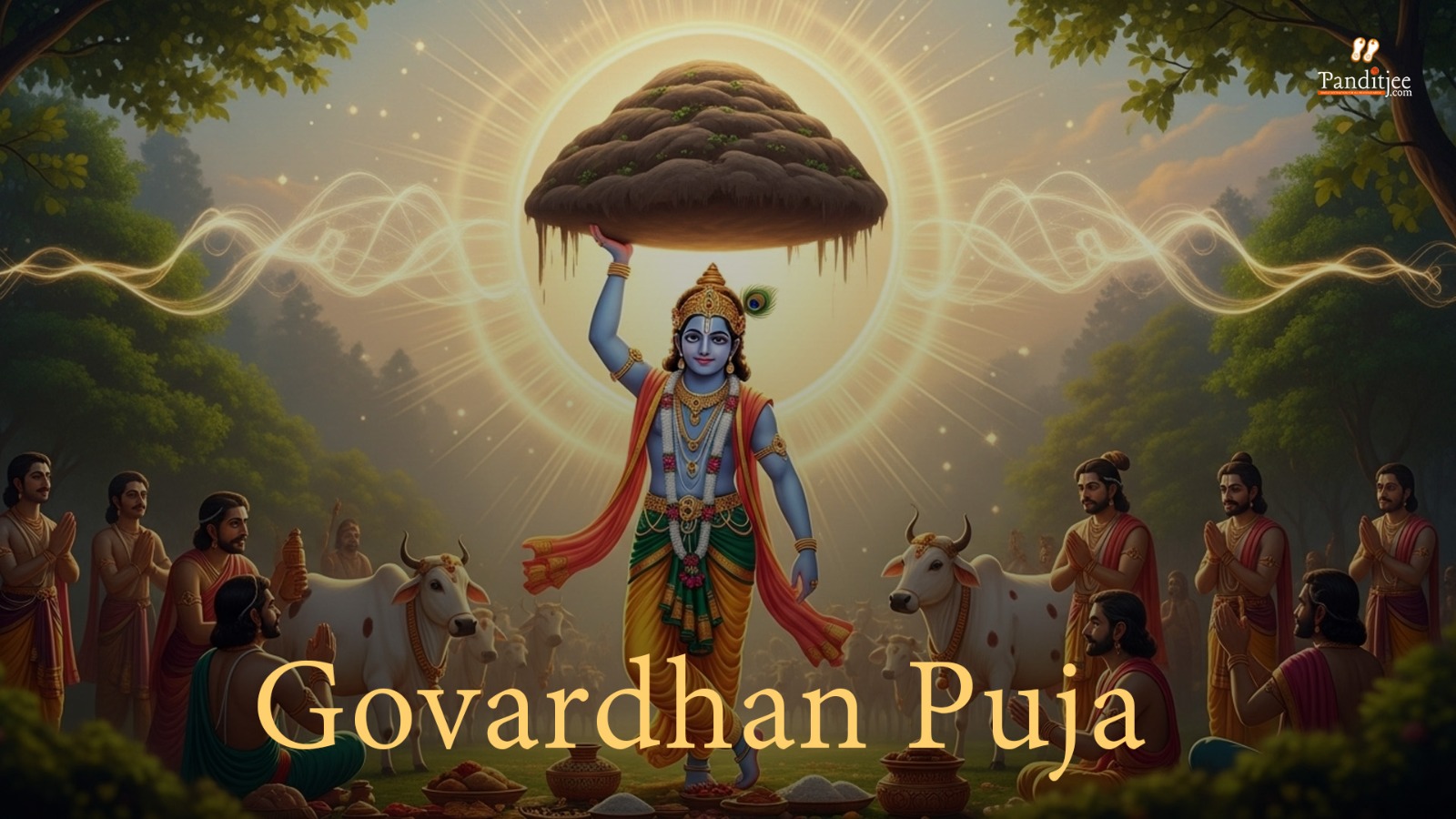
Govardhan Puja, also known as Annakut, is celebrated a day after Diwali across India with immense devotion and joy. It marks the day when Lord Krishna lifted the Govardhan Hill to protect the people of Vrindavan from torrential rains sent by Lord Indra.
More than a mythological event, Govardhan Puja symbolizes faith over ego, nature’s reverence, and the eternal balance between human life and divine creation.
The Spiritual Significance of Govardhan Puja
According to the Bhagavata Purana, when Lord Krishna advised the people of Vrindavan to worship Govardhan Hill instead of Lord Indra, he emphasized that nature and its elements are direct forms of the Divine. Angered by this, Indra unleashed heavy rain, but Krishna held the hill on his little finger for seven days, protecting all beings.
This act taught mankind a timeless lesson — devotion and gratitude outweigh pride and material power.
On this day, devotees create symbolic Govardhan mountains using cow dung and natural materials, offering Annakut (a grand feast) to Lord Krishna as an expression of thankfulness for food, shelter, and protection.
Astrological Significance of Govardhan Puja
Astrologically, Govardhan Puja falls on the Pratipada Tithi of the Shukla Paksha in the month of Kartik, right after the Amavasya of Diwali. This phase marks the rebirth of the Moon, symbolizing renewal, emotional healing, and positive beginnings.
From an astrological perspective:
- The day is ruled by Planet Moon (Chandra), which governs emotions, nourishment, and connection to Mother Earth.
- Performing puja and Annakut rituals strengthens lunar energies, promoting peace of mind and family harmony.
- It is also considered auspicious for Taurus, Cancer, and Pisces natives, as their Moon placements align naturally with gratitude and service.
- Offering food and prayers to cows and nature helps pacify malefic planetary effects related to Rahu and Ketu, known for disrupting emotional balance and harmony with nature.
Rituals and Their Deeper Meaning
Govardhan Puja (Mount Ritual): Devotees build small mounds representing the Govardhan Hill and decorate them with flowers and food items, symbolizing the nurturing power of nature.
Annakut Offering: Thousands of food varieties are prepared and offered to Lord Krishna, expressing gratitude for abundance.
Cow Worship (Gau Puja): Cows are considered sacred in Vedic astrology and are connected with Venus (Shukra) — planet of love, compassion, and nourishment. Worshiping them invites prosperity and fertility.
Spiritual Message and Astrological Harmony
Govardhan Puja reminds us that true worship is gratitude — not just towards gods, but towards the Earth, food, animals, and all living beings.
Astrologically, the energy of this day supports balance between karma and compassion, urging us to stay grounded and humble, just like Lord Krishna.
Bowing to Nature and the Divine Within
In a world moving fast, Govardhan Puja brings us back to simplicity — a reminder that our greatest blessings are not man-made but divine gifts from nature.
This festival invites us to realign with the cosmic rhythm, honor our planetary energies, and live with devotion, balance, and gratitude.
May this Govardhan Puja bless you with peace, nourishment, and the divine protection of Lord Krishna.
