Blog
Maha Shivaratri 2026- Date, Significance, Vrat Vidhi, Rituals and Spiritual Meaning

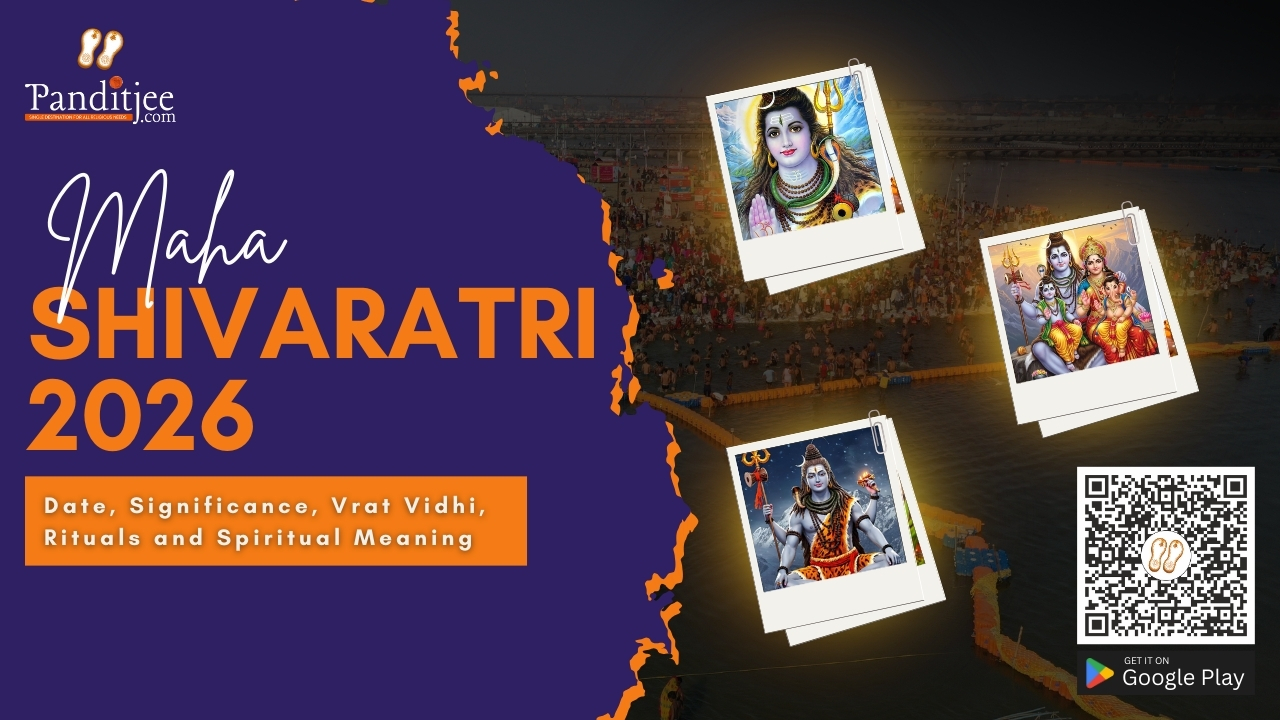
Maha Shivaratri 2026 will be observed on Sunday, 15 February 2026, during the Krishna Paksha Chaturdashi of the Phalguna month. Maha Shivaratri is one of the most sacred nights in Hinduism and is entirely dedicated to Lord Shiva, the supreme ascetic, the destroyer of ignorance, and the source of cosmic balance.
Unlike other Hindu festivals that are celebrated with joy and festivities, Maha Shivaratri is observed with austerity, fasting, meditation, and night-long worship. This night is considered extremely powerful for spiritual awakening, self-discipline, and inner transformation.
Religious Importance of Maha Shivaratri
The term Shivaratri means “the night of Shiva.” According to Hindu belief, this sacred night marks the convergence of Shiva and Shakti—the union of consciousness and energy. It is believed that on Maha Shivaratri, cosmic energies are naturally aligned to help individuals elevate their spiritual awareness.
Scriptures describe Maha Shivaratri as the most auspicious night to worship Lord Shiva because prayers offered on this day yield manifold spiritual benefits. Devotees believe that sincere worship on this night destroys sins, removes ignorance, and leads the soul toward liberation.
Mythological Significance
Several legends are associated with Maha Shivaratri:
It is believed to be the night when Lord Shiva performed the Tandava, the cosmic dance of creation, preservation, and destruction.
Another belief states that Maha Shivaratri marks the day when Lord Shiva married Goddess Parvati, symbolizing divine balance.
According to the Shiva Purana, the sacred Shiva Lingam manifested on this night as a pillar of infinite light, representing the formless and eternal nature of Shiva.
These stories highlight Shiva’s role as both a householder and an ascetic, teaching balance between worldly responsibilities and spiritual detachment.
Vrat Vidhi (Fasting Procedure) on Maha Shivaratri
Fasting on Maha Shivaratri is considered highly meritorious. Devotees prepare for the vrat a day earlier by consuming light and satvik food.
- On the day of Maha Shivaratri:
- Devotees take an early morning bath
- Sankalp (vow) of fasting is taken
- Worship of Lord Shiva is performed throughout the day
- Many observe a Nirjala fast (without food and water), while others follow a fruit-based or milk-based fast
- The fast is concluded the next morning after offering prayers and food to Lord Shiva.
Shiva Puja and Night Vigil (Jagran)
One of the most important aspects of Maha Shivaratri is Ratri Jagran, or staying awake throughout the night. Devotees perform Shiva Puja in four phases, known as Prahar Puja, each lasting approximately three hours.
Shiva Lingam is worshipped with:
- Water
- Milk
- Curd
- Honey
- Ghee
- Bel leaves
Each offering has spiritual significance and represents purification of body, mind, and soul.
Chanting “Om Namah Shivaya,” reciting Shiva Chalisa, and listening to Shiva katha are integral parts of the night-long worship.
Spiritual Significance of Maha Shivaratri
Spiritually, Maha Shivaratri represents the destruction of darkness and ignorance. Shiva symbolizes pure consciousness, and worshipping him on this night helps devotees transcend ego, attachments, and fear.
Meditation performed on Maha Shivaratri is believed to be exceptionally powerful. Yogic traditions state that the natural upward flow of energy on this night supports inner awakening and self-realization.
This night teaches control over senses, discipline, humility, and surrender to the divine.
Astrological and Yogic Perspective
From an astrological viewpoint, Maha Shivaratri occurs when planetary positions support spiritual practices. Yogis consider this night ideal for meditation and inner silence.
Many spiritual seekers believe that energies are naturally heightened, making it easier to experience stillness and awareness. This is why Maha Shivaratri holds immense importance in yogic and ascetic traditions.
Cultural and Social Importance
Across India, temples dedicated to Lord Shiva witness massive gatherings of devotees. Special abhishekams, bhajans, and kirtans are organized. Pilgrimage sites like Kashi, Ujjain, and Somnath observe Maha Shivaratri with deep devotion.
The festival reinforces values of simplicity, renunciation, and devotion, reminding people that inner peace is achieved through self-control and faith.
Message of Maha Shivaratri
Maha Shivaratri teaches that true liberation comes from conquering inner darkness. It reminds devotees to rise above ego, desires, and ignorance and align with higher consciousness.
The festival encourages self-reflection, discipline, and surrender—qualities essential for spiritual growth.
Maha Shivaratri 2026 is a sacred opportunity for devotees to connect deeply with divine consciousness. By observing fasts, performing night-long worship, and practicing meditation, one can experience inner purification and spiritual strength.
Rather than being just a ritual, Maha Shivaratri is a reminder that transformation begins within. When devotion meets discipline, the path to enlightenment becomes clear.
Download Panditjee App Now
https://play.google.com/store/apps/details?id=com.cliqindia.pandit_jee_app