
Blog
Chhath Puja: How Is the Four-Day Festival Celebrated? Complete Guide to Nahaye Khaye, Kharna, Sandhya Arghya and Usha Arghya

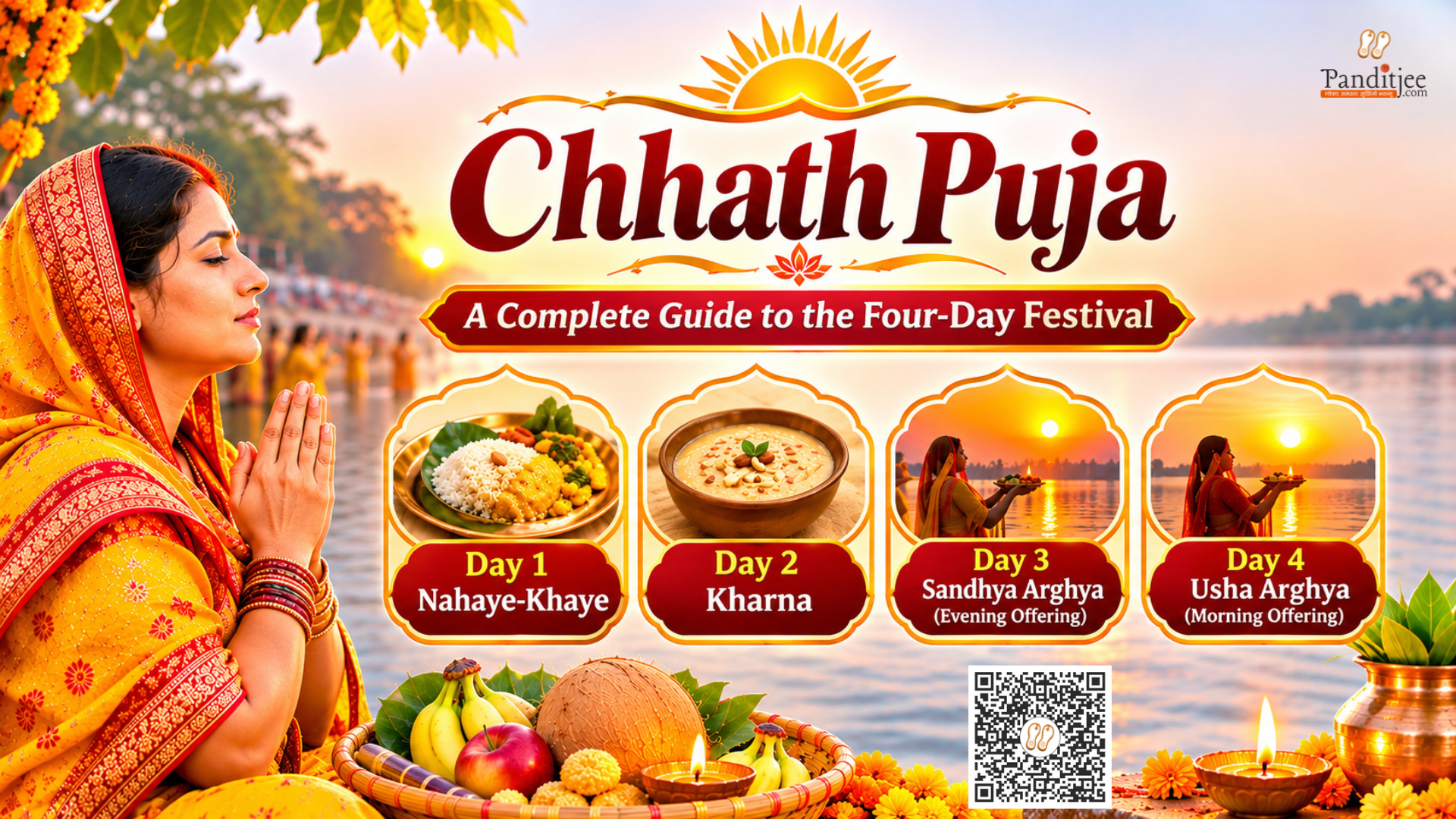
Chhath Puja is one of the most significant traditional festivals in India, celebrated with great devotion, particularly in Bihar, Jharkhand, eastern Uttar Pradesh, and parts of Nepal. Dedicated to Lord Surya (the Sun God) and Chhathi Maiya, this festival is observed to seek blessings for good health, prosperity, family well-being, and happiness.
Chhath Mahaparv is celebrated over four days, beginning with Nahaye Khaye and concluding with Usha Arghya and the completion of the fast. Throughout the festival, devotees follow traditional rituals with great discipline, maintaining cleanliness, purity, and devotion.
Here is a complete guide to the four days of Chhath Puja and the rituals associated with each day.
Day 1: Nahaye Khaye
Nahaye Khaye marks the beginning of Chhath Mahaparv. On this day, devotees, known as Vratīs, wake up early, take a holy bath, and thoroughly clean their homes and kitchens. Special attention is given to cleanliness and purity before beginning the rituals.
After completing the preparations, a traditional sattvik meal is prepared. The food generally includes bottle gourd curry (lauki ki sabzi), chana dal, and rice. The meal is prepared with great care, following traditional practices.
The Vratī consumes this meal, marking the formal beginning of the Chhath preparations.
Day 2: Kharna
The second day of Chhath Puja is known as Kharna. On this day, devotees observe a fast throughout the day, without consuming food or water until the evening rituals.
After sunset, the Vratī takes a bath and prepares the traditional Kharna prasad. The offerings generally include jaggery-based kheer, roti, and fruits. After offering the prasad to Lord Surya and Chhathi Maiya, the Vratī consumes it and distributes it among family members and others.
Following Kharna, the rigorous 36-hour Nirjala fast begins, during which devotees abstain from both food and water. This is considered one of the most challenging parts of the Chhath festival.
Day 3: Sandhya Arghya
The third day is dedicated to Sandhya Arghya, one of the most important rituals of Chhath Puja.
On this day, families prepare traditional offerings such as thekua, rice laddoos, fruits, and other seasonal items. These offerings are arranged beautifully in bamboo baskets and soops, which are an essential part of Chhath traditions.
In the evening, devotees gather at riverbanks, ponds, and other water bodies with their families. Standing in the water, they offer arghya to the setting Sun using water and milk. During this ritual, prayers are offered to Lord Surya and Chhathi Maiya for the well-being, happiness, and prosperity of the family.
The atmosphere at the ghats becomes devotional with traditional Chhath songs, prayers, and community celebrations.
Day 4: Usha Arghya and Paran
The fourth and final day of Chhath Mahaparv is known as Usha Arghya. On this day, devotees reach the ghats before sunrise to offer prayers to the rising Sun.
As the Sun rises, devotees offer arghya and seek blessings from Lord Surya and Chhathi Maiya for good health, happiness, and prosperity. After completing the rituals, prayers are offered and prasad is distributed among family members and devotees.
The Vratī then performs Paran, which marks the completion of the 36-hour fast. With this ritual, the four-day celebration of Chhath Mahaparv comes to an end.
Religious and Cultural Significance of Chhath Puja
Chhath Puja is not just a religious festival; it is also a celebration of gratitude towards nature. Lord Surya is worshipped as the source of energy and life on Earth, while Chhathi Maiya is worshipped for the well-being of children and family prosperity.
The festival highlights the values of discipline, devotion, cleanliness, patience, and respect for nature. Family members and communities come together to prepare prasad, clean the ghats, and organize the rituals.
The four-day celebration reflects deep faith, dedication, and a strong connection with nature and traditional values.
Jai Chhathi Maiya! Jai Surya Narayan!
For more information about Hindu festivals, traditional rituals, and puja practices, visit Panditjee.com. You can also explore puja-related information and book experienced pandits for your religious ceremonies.
