
Blog
Shardiya Navratri 2026 Day 7: Maa Kalaratri Puja Vidhi, Mantra, Bhog, Colour and Significance

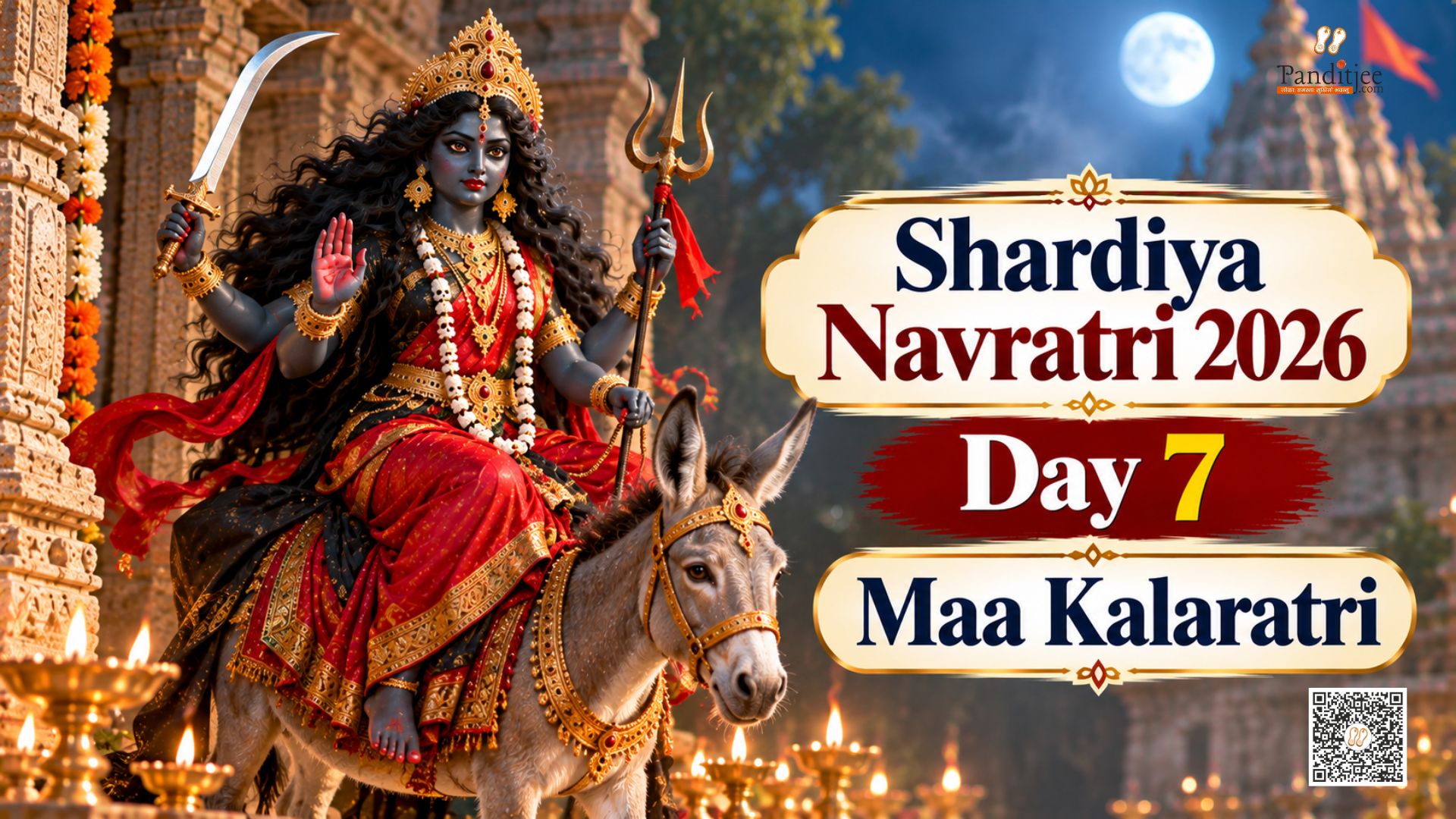
Shardiya Navratri Day 7 will be observed on Saturday, October 17, 2026. The seventh day of Navratri is dedicated to Maa Kalaratri, the seventh form of Goddess Durga. She is worshipped as the divine force that destroys evil, removes fear and protects devotees from negative influences.
Although Maa Kalaratri is depicted in a fierce form, she is also known as Shubhankari, meaning the Goddess who brings auspiciousness and well-being. Her worship symbolises courage, protection and the triumph of good over evil.
According to Hindu religious traditions, devotees offer jaggery (gur) to Maa Kalaratri and seek her blessings for strength, peace and protection. Grey is the popular colour associated with the seventh day of Navratri in the 2026 colour sequence.
Read on to learn about Maa Kalaratri’s divine form, Puja Vidhi, mantra, Bhog, auspicious colour and the significance of worshipping her on Navratri Day 7.
Navratri Day 7, 2026: Key Details
- Date: Saturday, October 17, 2026
- Navratri Day: Seventh day
- Tithi: Shukla Paksha Saptami
- Goddess: Maa Kalaratri
- Auspicious Colour: Grey
- Traditional Bhog: Jaggery (Gur)
- Main Mantra: Om Devi Kalaratryai Namah
- Form of Goddess Durga: Seventh Navadurga
Who Is Maa Kalaratri?
Maa Kalaratri is the seventh manifestation of Goddess Durga and one of the most powerful forms of the Divine Mother. Her fierce appearance represents the destruction of evil and the removal of fear and darkness.
She is traditionally depicted with a dark complexion, dishevelled hair and three eyes. She rides a donkey and has four hands, holding weapons in two of them while the other two are associated with the gestures of fearlessness and blessing.
Despite her fearsome appearance, Maa Kalaratri is considered compassionate towards her devotees. She is also known as Shubhankari, a name associated with auspiciousness and well-being.
Her divine form reminds devotees that courage, faith and determination can help them overcome challenges and face difficult situations with confidence.
Navratri Day 7 Colour 2026: Why Is Grey Auspicious?
Grey is the popular colour for Navratri Day 7 in 2026.
Grey is associated with stability, balance and composure during challenging circumstances. Devotees who follow the traditional Navratri colour sequence can wear grey clothes or incorporate the colour into their puja arrangements.
However, Navratri colour traditions may differ across regions and families. Devotees can follow their local customs and family traditions while worshipping Maa Kalaratri.
Maa Kalaratri Mantra for Navratri Day 7
Chanting Maa Kalaratri’s sacred mantra is an important part of her worship. Devotees recite it with faith and devotion while seeking the Goddess’s blessings for courage, protection and peace.
Maa Kalaratri Main Mantra
ॐ देवी कालरात्र्यै नमः॥
Transliteration: Om Devi Kalaratryai Namah.
Devotees may chant this mantra during the puja. Some traditions recommend repeating it 108 times using a Japa Mala.
Maa Kalaratri Dhyan Mantra
एकवेणी जपाकर्णपूरा नग्ना खरास्थिता।
लम्बोष्ठी कर्णिकाकर्णी तैलाभ्यक्तशरीरिणी॥
This traditional verse describes the distinctive and fierce form of Maa Kalaratri. Devotees may recite it during meditation or worship according to their family traditions.
Navratri Day 7 Bhog: What Should You Offer Maa Kalaratri?
Jaggery (Gur) is traditionally offered as Bhog to Maa Kalaratri on the seventh day of Navratri.
Devotees can offer plain jaggery or prepare a traditional sweet using jaggery according to their household customs. Other fruits and Sattvik offerings may also be included in the puja.
The offering should be prepared with cleanliness and devotion. After the puja, it can be distributed among family members as Prasad.
Maa Kalaratri Puja Vidhi and Samagri
Devotees can perform Maa Kalaratri Puja at home using traditional worship materials and a simple ritual.
Puja Samagri
The following items may be arranged for the puja:
- Picture or idol of Maa Kalaratri
- Roli or Kumkum
- Akshat (uncooked rice)
- Flowers
- Diya with ghee or oil
- Incense sticks or Dhoop
- Water
- Fruits
- Jaggery (Gur)
- Prasad
- Kalash and other regular Navratri puja items, as required
Maa Kalaratri Puja Vidhi
- Wake up early, take a bath and wear clean clothes.
- Clean the prayer area and arrange the puja materials.
- Light a diya and incense, then offer prayers to Maa Kalaratri.
- Offer Roli, Akshat, flowers and water to the Goddess.
- Present jaggery as Bhog.
- Chant the mantra “Om Devi Kalaratryai Namah” and recite the Dhyan Mantra.
- Recite the Durga Chalisa or Durga Saptashati if these form part of your regular worship.
- Perform the Aarti and pray for protection, courage, peace and prosperity.
- Distribute the Prasad among family members and devotees.
The puja should be performed according to the family’s established Navratri traditions.
What Should You Do on Navratri Day 7?
On October 17, 2026, devotees can observe the following traditional practices:
- Worship Maa Kalaratri with devotion.
- Offer jaggery as Bhog.
- Chant the Goddess’s sacred mantra.
- Wear grey if following the popular Navratri colour tradition.
- Observe a fast according to personal health needs and family customs.
- Recite the Durga Chalisa, Durga Saptashati or other traditional prayers.
- Perform the Aarti and distribute Prasad.
- Help someone in need or donate food as an act of compassion and devotion.
These practices encourage devotees to focus on faith, gratitude, courage and the well-being of others.
Navratri Day 7 Vrat Food: What Can You Eat?
Devotees observing a Navratri fast can follow the dietary rules traditionally practised in their households. Common fasting foods include:
- Fresh fruits
- Milk and curd
- Makhana
- Sabudana
- Kuttu flour
- Singhara flour
- Samak rice
- Potatoes and permitted vegetables
- Sendha Namak
- Nuts and dry fruits
Fasting practices vary by region and family. Children, pregnant women, older adults and people with medical conditions should follow appropriate dietary advice rather than undertake a restrictive fast without suitable guidance.
Why Is Maa Kalaratri Worshipped on the Seventh Day of Navratri?
Maa Kalaratri’s fierce form represents the power to confront and overcome darkness, fear and harmful forces. Her worship is associated with courage, protection and the removal of obstacles.
Her name is connected with the darkness of night, while her benevolent aspect as Shubhankari highlights the protective and auspicious nature of the Goddess.
The seventh day of Navratri reminds devotees that challenges can be faced with faith, strength and determination. Through prayer and devotion, they seek Maa Kalaratri’s blessings for peace, safety and spiritual well-being.
Frequently Asked Questions (FAQs)
1. When is Navratri Day 7 in 2026?
Navratri Day 7 will be observed on Saturday, October 17, 2026.
2. Which Goddess is worshipped on Navratri Day 7?
Maa Kalaratri, the seventh form of Goddess Durga, is worshipped on the seventh day of Navratri.
3. What is the colour for Navratri Day 7 in 2026?
Grey is the popular colour associated with the seventh day of Navratri in 2026. Colour traditions may vary by region and family.
4. What Bhog is offered to Maa Kalaratri?
Jaggery (Gur) is traditionally offered as Bhog to Maa Kalaratri.
5. What is the main mantra of Maa Kalaratri?
The main mantra is “ॐ देवी कालरात्र्यै नमः॥” (Om Devi Kalaratryai Namah).
6. Why is Maa Kalaratri also called Shubhankari?
Maa Kalaratri is also known as Shubhankari, a name associated with auspiciousness and well-being.
Get More Navratri Updates on Panditjee.com
Celebrate Shardiya Navratri by worshipping Maa Kalaratri and seeking blessings for courage, protection, peace and prosperity.
For more information about Navratri Puja Vidhi, auspicious dates, Shubh Muhurat, fasting traditions, sacred mantras and Hindu festivals, visit Panditjee.com.
Explore informative articles on Hindu religious traditions, festival rituals and devotional practices to make your Navratri preparations easier.
Download Now:– https://play.google.com/store/apps/details?id=com.cliqindia.pandit_jee_app&hl=en_IN
