
Blog
Shardiya Navratri 2026 Day 1: Maa Shailputri Puja, Shubh Muhurat, Bhog and Puja Vidhi

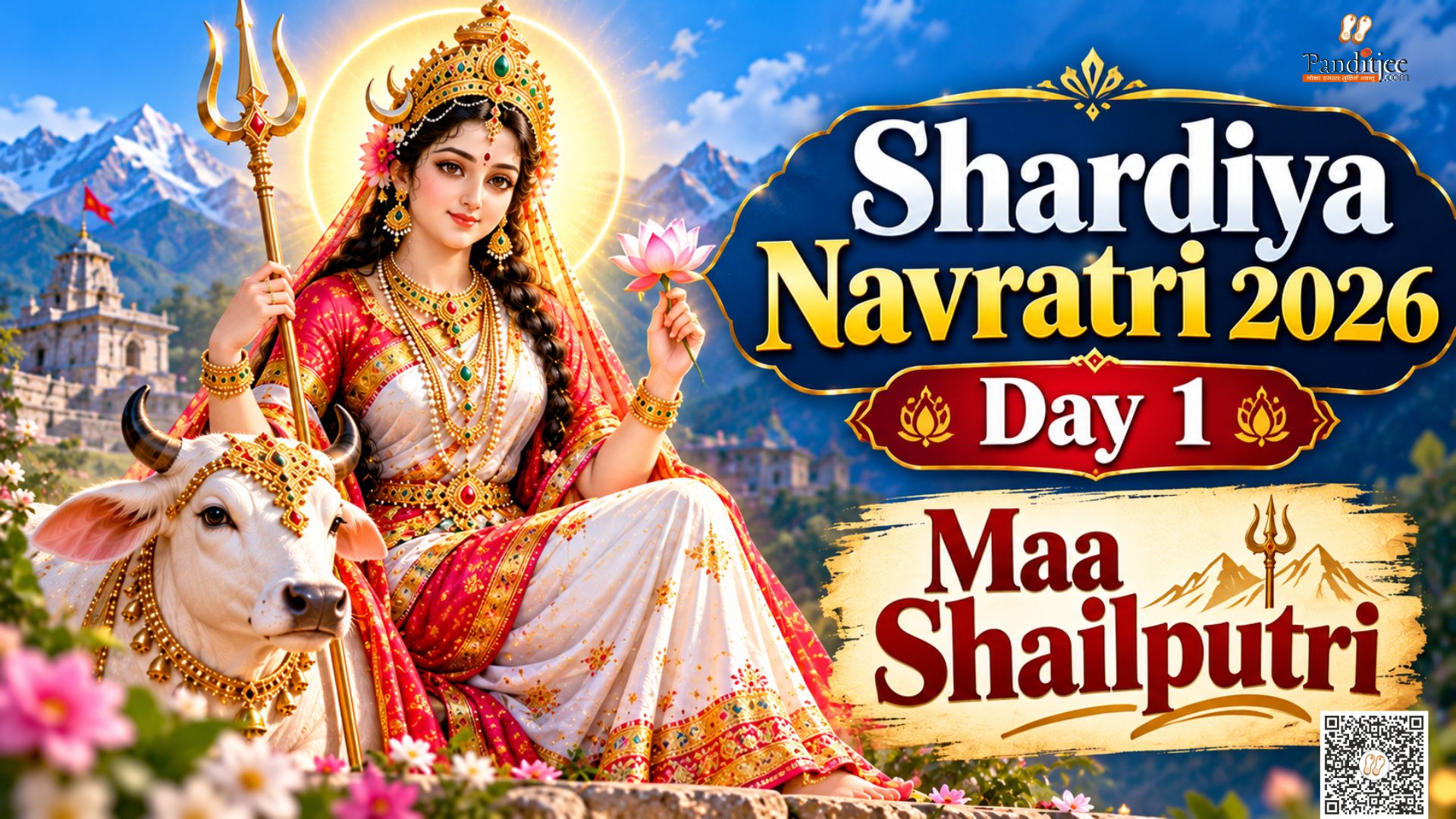
The auspicious festival of Shardiya Navratri 2026 will begin on Sunday, October 11. During the nine days of Navratri, devotees worship the nine forms of Goddess Durga. On the first day, devotees worship Maa Shailputri, the first form of Goddess Durga. The festival officially begins with Ghatasthapana or Kalash Sthapana, the ritual of establishing the sacred pot.
This year, Shardiya Navratri will begin on October 11 and conclude on October 19. Vijayadashami, also known as Dussehra, will be celebrated on October 20, 2026.
When Is the First Day of Navratri 2026?
The first day of Navratri is observed on Pratipada Tithi of the Shukla Paksha in the Hindu month of Ashwin. In 2026, Pratipada Tithi will begin at 9:19 PM on October 10 and end at 9:30 PM on October 11. Therefore, Maa Shailputri will be worshipped and Ghatasthapana will be performed on October 11.
Navratri Day 1 Date: October 11, 2026, Sunday Tithi: Ashwin Shukla Pratipada Goddess: Maa Shailputri Main Ritual: Ghatasthapana/Kalash Sthapana Navratri Ends: October 19, 2026 Dussehra: October 20, 2026
Ghatasthapana Shubh Muhurat
One of the most important rituals on the first day of Navratri is Ghatasthapana, also known as Kalash Sthapana. It marks the beginning of the nine-day worship of Goddess Durga.
According to the Panchang for New Delhi, the main auspicious time for Ghatasthapana on October 11 will be from 6:19 AM to 10:12 AM. The Abhijit Muhurat will be from 11:44 AM to 12:31 PM.
Please note that the exact Ghatasthapana Muhurat may vary slightly depending on the local sunrise and location. Devotees living outside Delhi should consult their local Panchang for the most accurate timings.
Important Timings for Navratri Day 1
Pratipada Tithi Begins: October 10, 9:19 PM
Pratipada Tithi Ends: October 11, 9:30 PM
Ghatasthapana Muhurat: 6:19 AM to 10:12 AM
Abhijit Muhurat: 11:44 AM to 12:31 PM
Day: Sunday
Goddess: Maa Shailputri
Who Is Maa Shailputri?
Maa Shailputri is considered the first manifestation of Goddess Durga. According to Hindu religious beliefs, she is the daughter of Himavan, the king of the mountains, which is why she is known as Shailputri. She is also regarded as a form of Goddess Parvati.
Maa Shailputri rides a bull, known as Vrishabha. She holds a trident in her right hand and a lotus flower in her left hand. Her divine form represents strength, patience, stability and a deep connection with nature.
On the first day of Navratri, devotees worship Maa Shailputri to begin their spiritual journey of devotion over the nine days of the festival.
Significance of Worshipping Maa Shailputri
It is believed that worshipping Maa Shailputri blesses devotees with strength, peace and stability. Her divine form symbolizes determination, courage and self-confidence.
On the first day of Navratri, devotees clean their homes and prayer areas. They then perform Kalash Sthapana during the auspicious Muhurat and offer prayers to Maa Shailputri with devotion.
What Is Done During Ghatasthapana?
During Ghatasthapana, a sacred Kalash is established as a symbol of divine feminine energy. One of the traditional rituals involves sowing barley seeds (jau) in soil placed near the Kalash.
The Kalash is filled with water, and items such as betel nuts and Akshat (unbroken rice grains) may be placed inside it. Mango leaves and a coconut are then arranged on top of the Kalash.
After the Kalash is established, devotees invoke Goddess Durga and continue worship throughout the nine days of Navratri. Lighting a diya and offering daily prayers are also important parts of the ritual.
Ghatasthapana is regarded as the spiritual beginning of the Navratri festival.
What Bhog Should Be Offered to Maa Shailputri?
Offering ghee as Bhog to Maa Shailputri is considered auspicious. Devotees may also offer fruits, milk, sweets and other Sattvik Prasad according to their faith and family traditions.
The significance of Bhog is not limited to the offerings themselves. Devotion, sincerity and purity of intention are also considered important during worship.
Maa Shailputri Puja Vidhi
On the first day of Navratri, devotees can follow these traditional worship rituals:
Wake up early, take a bath and wear clean clothes.
Clean the prayer area and prepare the place of worship.
Perform Ghatasthapana during the auspicious Muhurat.
Place the idol or picture of Maa Shailputri in a clean and sacred space.
Light a diya and incense sticks.
Offer flowers, Akshat, Roli, fruits and Bhog to the Goddess.
Chant Maa Shailputri’s mantra with devotion.
Recite the Durga Chalisa or Durga Saptashati, according to your tradition.
Perform the Aarti and pray for the happiness, peace and prosperity of your family.
Maa Shailputri Mantra
Om Devi Shailputryai Namah॥
Devotees chant this sacred mantra with faith and devotion to seek the blessings of Maa Shailputri.
What to Do and Avoid on the First Day of Navratri
On the first day of Navratri, devotees should keep their homes and prayer areas clean. Consuming Sattvik food, maintaining a peaceful state of mind and worshipping Goddess Durga with devotion are considered auspicious practices.
If you are performing Kalash Sthapana at home, try to follow the prescribed Muhurat and the rituals followed in your family tradition.
Devotees should avoid rushing through the rituals and perform the worship with sincerity. Puja Vidhi and Bhog traditions may vary across different regions and families, so it is appropriate to follow your customary practices.
Pray to Maa Shailputri for Happiness and Peace
The first day of Shardiya Navratri marks more than the beginning of a festival. It is the first step in a nine-day spiritual journey dedicated to Goddess Durga.
Maa Shailputri’s divine form inspires devotees to embrace strength, patience and stability in their lives. Through prayers and devotion, devotees seek blessings for their family’s happiness, peace, health and prosperity.
For information about Puja Vidhi, fasting, auspicious dates and Shubh Muhurat, download the Panditjee App and get guidance from an astrologer from the comfort of your home.
Download Now:– https://play.google.com/store/apps/details?id=com.cliqindia.pandit_jee_app&hl=en_IN
