Blog
Nag Panchami 2026: August 17 Date, Puja Muhurat, Vrat Katha, Rituals and Religious Significance

Nag Panchami is one of the most ancient and spiritually significant festivals observed during the sacred month of Shravan. Dedicated to the worship of Nag Devtas, the festival reflects the deep connection between Sanatan Dharma, nature and spiritual traditions. On this auspicious day, devotees worship serpent deities and pray for family protection, peace, prosperity and well-being. Serpents hold a special place in Hindu traditions because of their association with Lord Shiva, Lord Vishnu and spiritual energy.
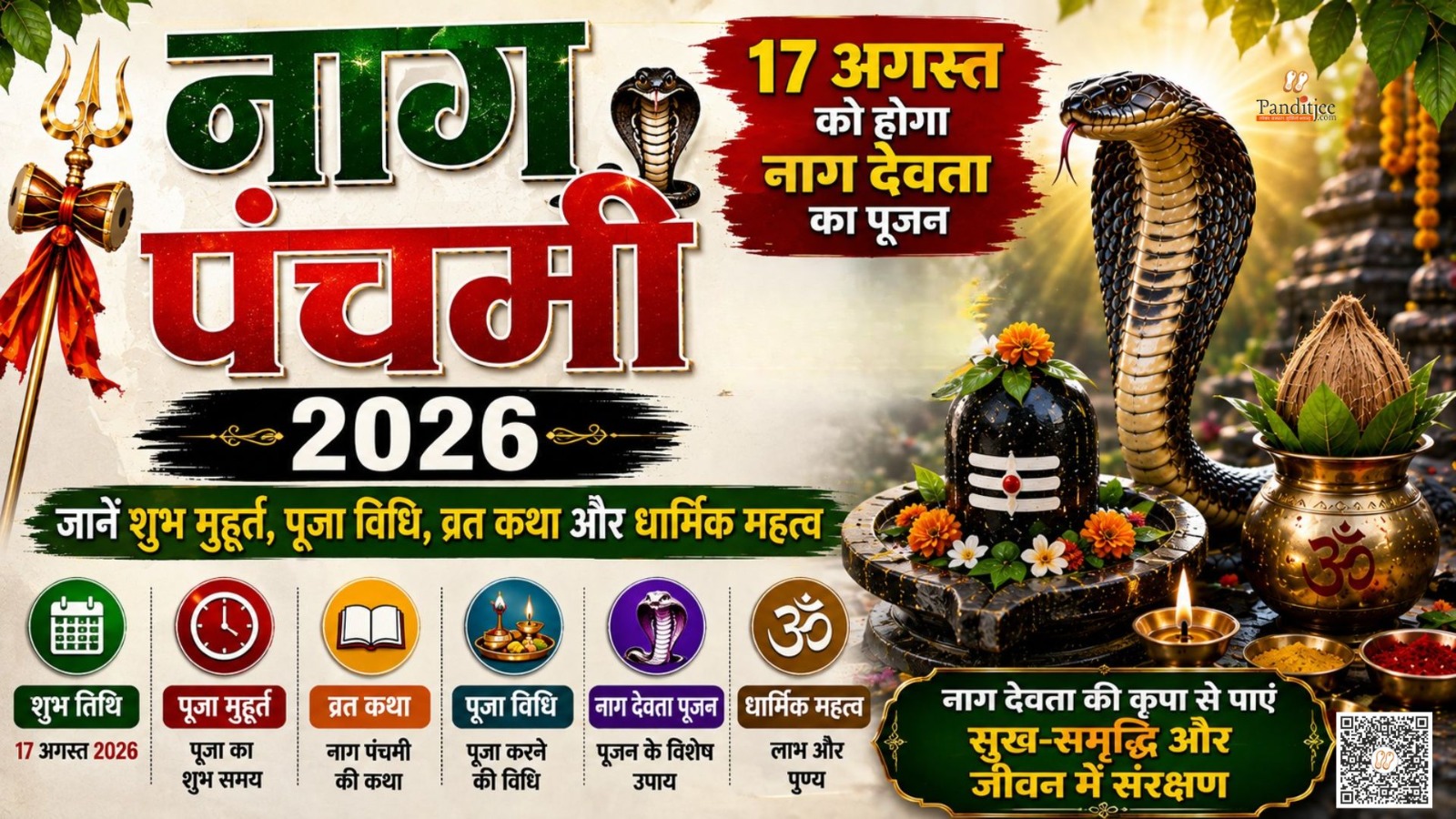
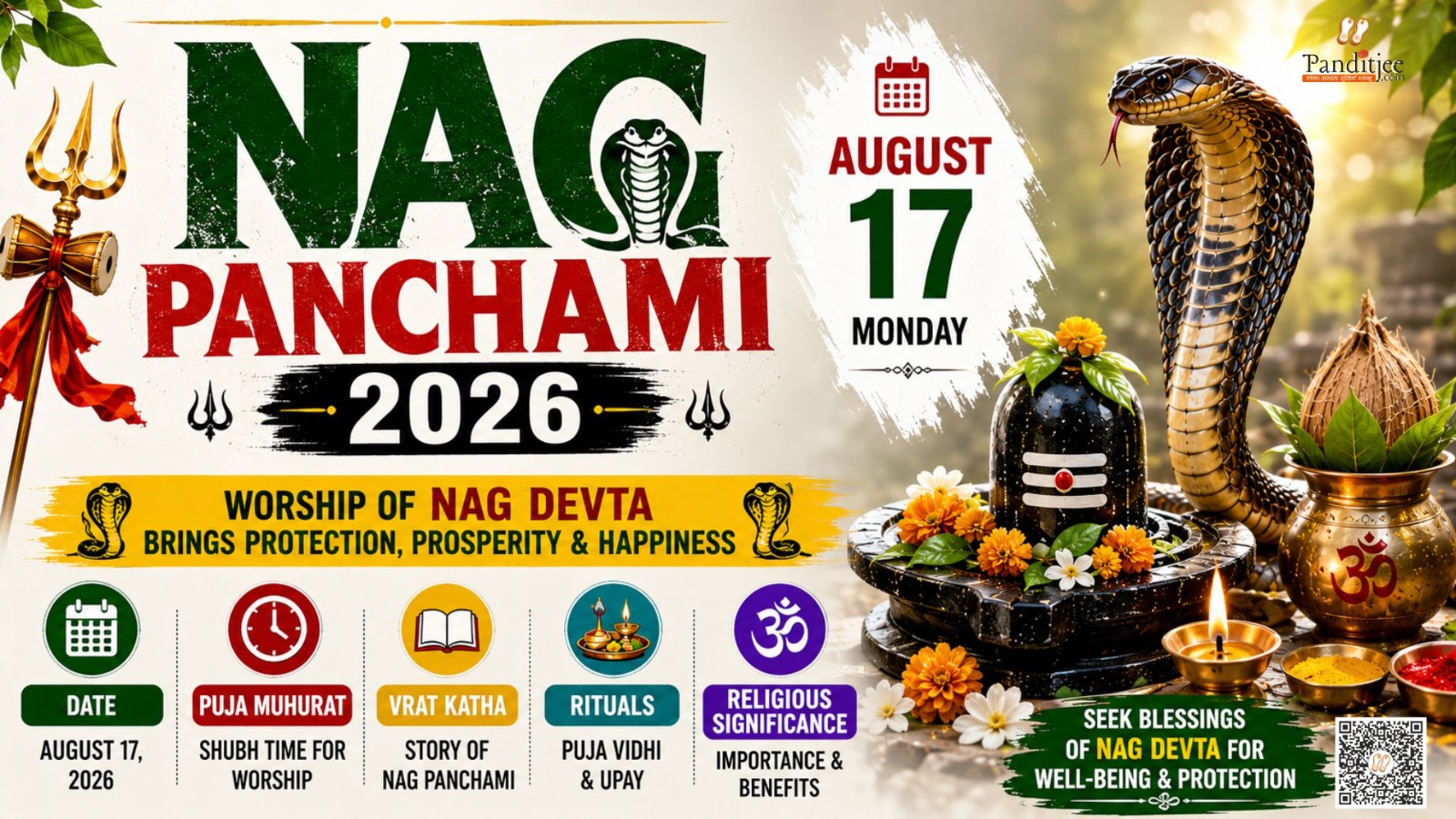
In 2026, Nag Panchami will be observed on Monday, August 17. The festival becomes particularly significant this year as it coincides with the third Shravan Monday, creating an important day for devotees of both Lord Shiva and the Nag Devtas.
According to the Hindu Panchang, the Panchami Tithi begins on August 16, 2026, at around 4:53 PM and ends on August 17 at around 5:00 PM. Since Panchami prevails during the daytime on August 17, Nag Panchami will be observed on that day. Puja timings may vary according to location, so devotees should follow the local Panchang for the most accurate Muhurat.
Nag Panchami 2026 will be celebrated on Monday, August 17. The Panchami Tithi will begin on August 16 in the evening and continue until August 17 in the evening. The morning hours are traditionally considered highly auspicious for Nag Devta worship.
The exact Puja Muhurat varies from city to city because sunrise and local Panchang calculations differ. Devotees can take a bath in the morning, wear clean clothes and begin the worship after preparing the Puja space.
The fact that Nag Panchami falls on a Monday in 2026 adds special significance to the festival. Shravan Monday is traditionally dedicated to Lord Shiva, while Nag Devtas are closely associated with Mahadev. The serpent Vasuki around Lord Shiva’s neck is one of the most important symbols of this divine connection.
Why is Nag Panchami Celebrated?
Nag Panchami is primarily observed to honour the Nag Devtas and express reverence towards nature and the forces associated with the earth. In Sanatan tradition, serpents are not viewed merely as creatures but are connected with the earth, fertility, water, protection and hidden spiritual energies.
In traditional agricultural societies, snakes also played an important role in maintaining ecological balance by controlling rodents and protecting crops. The tradition of serpent worship therefore reflects an ancient cultural understanding of coexistence between human beings and nature.
On a spiritual level, serpents represent power, transformation and consciousness. In yogic traditions, Kundalini Shakti is symbolically described as a serpent-like spiritual energy that can awaken through disciplined spiritual practice.
Nag Panchami Vrat Katha: The Story of King Janamejaya and Sage Astika
One of the most important legends associated with Nag Panchami concerns King Janamejaya and Sage Astika. According to the traditional story, King Parikshit died after being bitten by the serpent king Takshaka. Filled with anger and grief, Janamejaya decided to take revenge against the entire serpent community.
He organised a powerful Sarpa Yajna, intending to destroy the Nagas. Through the power of the ritual, numerous serpents began being drawn towards the sacrificial fire. The situation threatened to result in the destruction of the entire Naga lineage.
At this crucial moment, Sage Astika intervened. Through wisdom and spiritual authority, he persuaded King Janamejaya to stop the sacrifice and abandon his desire for revenge. The king eventually agreed, saving the serpent community from complete destruction.
The story carries a powerful spiritual message. It reminds devotees that anger and revenge can lead to destruction, while wisdom, compassion and restraint can restore balance. The story is therefore deeply connected with the spirit of Nag Panchami.
The Story of Lord Krishna and Kaliya Nag
Another popular story associated with serpent worship is the story of Lord Krishna and Kaliya Nag. According to Hindu tradition, Kaliya had polluted the waters of the Yamuna and created fear among the people of the region.
Lord Krishna entered the river and confronted Kaliya. After defeating him, Krishna instructed the serpent to leave the Yamuna and move to another place. The waters were subsequently restored and the people were freed from fear.
The story represents the triumph of righteousness over destructive forces while also conveying a message about restoring balance between human communities, nature and living beings.
What is the Connection Between Lord Shiva and Nagas?
The connection between Nag Panchami and Lord Shiva is particularly profound. Lord Shiva is traditionally depicted with Nagaraja Vasuki around His neck. The serpent represents Shiva’s mastery over fear, death and powerful primal forces.
Lord Vishnu is also traditionally depicted resting upon Shesha Naga, who represents eternity and the infinite cycles of creation and dissolution.
In yogic and spiritual traditions, the serpent represents Kundalini Shakti, the dormant spiritual energy believed to exist within the subtle body. The symbolic awakening of this energy represents the journey towards higher consciousness.
Therefore, Nag Panchami is not simply a festival involving the worship of snakes. It carries a deeper spiritual symbolism connected with divine power, transformation and the awakening of consciousness.
Nag Panchami 2026 Puja Vidhi
Devotees traditionally begin Nag Panchami by waking early, taking a bath and wearing clean clothes. The Puja area is cleaned and a Naga Devta idol, image or symbolic representation is placed for worship.
Flowers, turmeric, sandalwood, vermilion, Akshat and other traditional Puja items are offered to the Nag Devta. In some regions, devotees draw symbolic images of snakes near the entrance of their homes using turmeric or sandalwood, representing protection and divine blessings for the household.
Devotees chant Naga mantras and listen to or recite the Nag Panchami Vrat Katha. The worship concludes with Aarti and prayers for the safety, health, peace and prosperity of the family.
The eight principal serpent deities traditionally remembered during Naga worship are Ananta, Vasuki, Padma, Mahapadma, Takshaka, Kulika, Karkotaka and Shankha.
Is it Necessary to Feed Milk to Real Snakes on Nag Panchami?
In some regions, devotees traditionally offer milk to real snakes during Nag Panchami. However, snakes do not naturally consume milk, and forcing milk upon them can be harmful to their health.
Devotees should therefore avoid catching, handling or feeding wild snakes. Worshipping a Naga Devta idol, image or symbolic representation at home or in a temple is a safer way to preserve the spiritual essence of the tradition.
The deeper message of Nag Panchami is respect for life and coexistence with nature. Avoiding harm to animals is therefore more consistent with the spirit of the festival.
Nag Panchami Fasting Rules and Spiritual Discipline
Many devotees observe a fast on Nag Panchami as an expression of devotion and self-discipline. Fasting traditions vary between families and regions. Some devotees eat only once on the previous day and observe a fast on Panchami, while others follow a fruit-based or Sattvic diet.
The purpose of the fast extends beyond avoiding food. It is traditionally considered a means of practising self-control, prayer, purity and mindfulness. Devotees are encouraged to avoid anger, arguments and negative thoughts and to spend the day in spiritual reflection.
Those who cannot undertake a strict fast because of age, pregnancy or health conditions should follow a suitable diet according to their circumstances. The spiritual value of the observance lies in devotion and sincerity rather than physical hardship.
Nag Panchami and Its Connection With Nature
One of the most meaningful aspects of Nag Panchami is its connection with nature. Snakes have historically played an important role in agricultural ecosystems by controlling rodents and contributing to ecological balance.
The festival therefore represents an ancient cultural expression of respect for living beings. It reminds people that every creature has a role within the larger system of nature and that human beings should learn to coexist with the world around them.
Nag Panchami can consequently be understood not only as a religious observance but also as a reminder of ecological responsibility and compassion towards living beings.
Nag Panchami and the Spiritual Meaning of Kundalini Shakti
The deeper spiritual symbolism of Nag Panchami is closely connected with Kundalini Shakti. In yogic philosophy, Kundalini is described as a dormant spiritual energy represented symbolically as a coiled serpent.
Through meditation, discipline and spiritual practice, this energy is traditionally believed to awaken and rise towards higher states of consciousness. The serpent therefore becomes a powerful symbol of transformation and inner awakening.
The shedding of a snake’s skin can also be understood symbolically as a representation of renewal and transformation. From this perspective, Nag Panchami encourages devotees to overcome fear, release negative tendencies and seek inner spiritual growth.
Why is Nag Panchami 2026 Especially Significant?
Nag Panchami will fall on Monday, August 17, 2026, coinciding with the third Shravan Monday. Since Mondays during Shravan are traditionally dedicated to Lord Shiva and serpents are closely associated with Mahadev, this combination holds special religious significance for devotees.
Devotees may worship Lord Shiva along with the Nag Devtas, perform Jalabhishek, offer Bel Patra, chant Shiva mantras and remember the sacred serpent deities according to their family and regional traditions.
The day therefore offers an opportunity to combine Shiva Bhakti with reverence for nature and reflection upon the deeper spiritual symbolism of the Nagas.
Nag Panchami 2026 will be observed on Monday, August 17. The sacred Shravan Shukla Panchami is traditionally marked by Nag Devta worship, fasting, mantra chanting and the recitation of the Nag Panchami Vrat Katha. The association of Nagas with Lord Shiva, Lord Vishnu and Kundalini Shakti gives the festival a profound religious and spiritual significance.
The story of King Janamejaya and Sage Astika teaches the importance of wisdom and compassion over revenge, while the story of Lord Krishna and Kaliya Nag highlights the restoration of balance and the triumph of righteousness. The serpent around Lord Shiva’s neck further represents mastery over fear and mortality.
The true message of Nag Panchami goes beyond ritual worship. It encourages respect for nature, coexistence with living beings, inner transformation and awareness of the spiritual forces represented by the Nagas. When observed with devotion and compassion, Nag Panchami becomes an opportunity to cultivate peace, humility, spiritual awareness and greater respect for the natural world.
For authentic and comprehensive information on Sanatan Dharma, Hindu festivals, fasting and Vrat traditions, Pooja rituals, Panchang, Vedic astrology, temples, mantras, scriptures and spiritual wisdom, download the Panditjee.com App. Connect with trusted Vedic knowledge, guidance from experienced Acharyas and timeless Sanatan traditions to make your spiritual journey more meaningful and enriching.