Blog
Hariyali Teej 2026: Why the Festival is Celebrated on August 15, Know Puja Muhurat, Vrat Katha, Shiva-Parvati Worship, Fasting Rules and Spiritual Significance

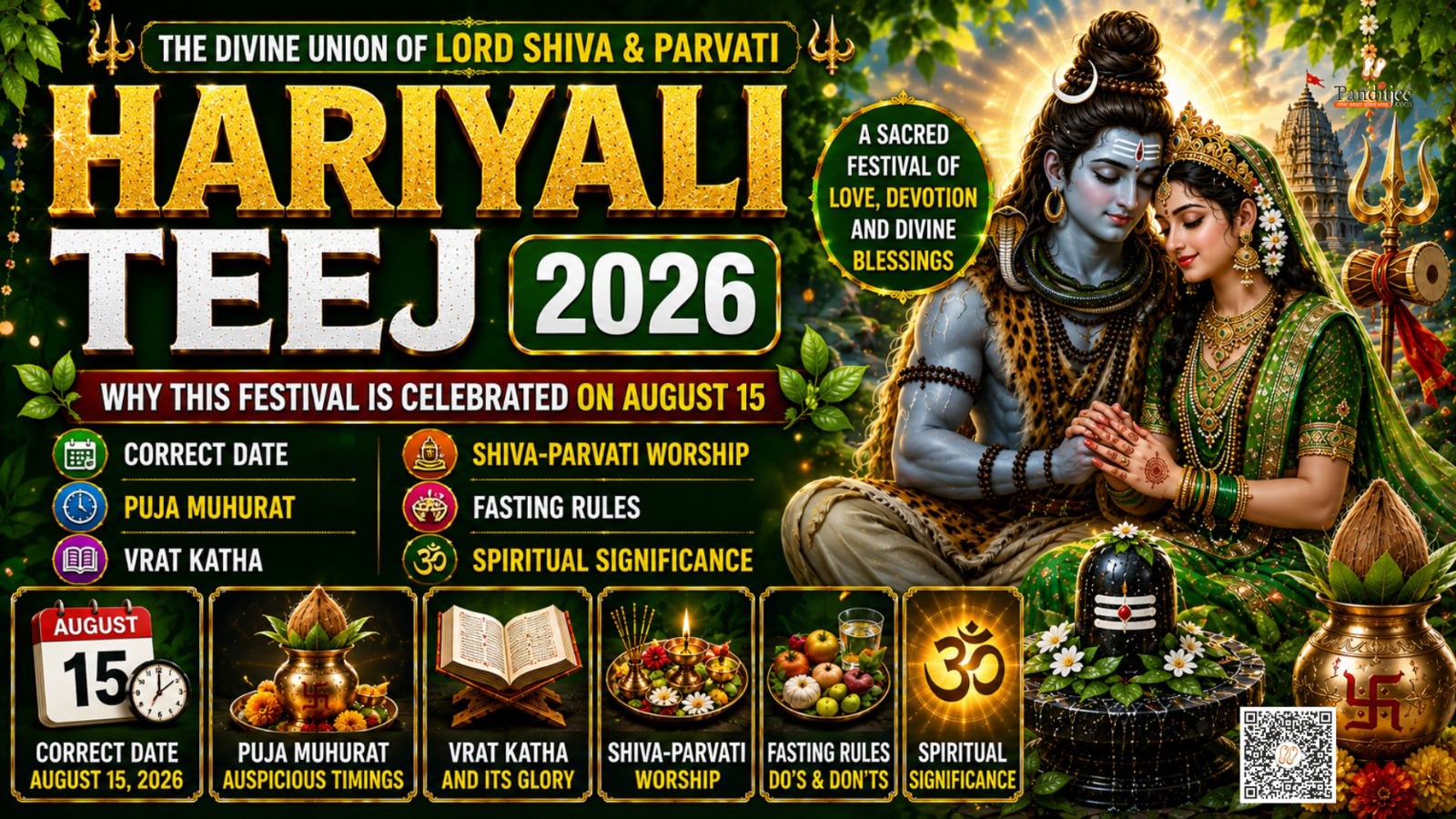
The arrival of Hariyali Teej brings a distinctive spiritual and cultural energy to the sacred month of Shravan. As the monsoon transforms the landscape with fresh greenery, women across North India celebrate this auspicious festival with traditional songs, swings, Mehendi, green bangles, festive attire and prayers dedicated to Lord Shiva and Goddess Parvati.
Hariyali Teej is regarded as one of the most important festivals of the Shravan season and symbolises devotion, marital harmony, feminine strength and the divine union of Shiva and Shakti. For married women, the festival is traditionally associated with prayers for the long life, health and well-being of their husbands. Unmarried women may also observe the fast and worship Goddess Parvati while praying for a suitable and spiritually compatible life partner.
In 2026, Hariyali Teej will be observed on Saturday, August 15. The festival falls on the Tritiya Tithi of Shravan Shukla Paksha. According to the Panchang, the Tritiya Tithi begins on August 14 at around 6:46 PM and ends on August 15 at around 5:28 PM. Since the Tritiya Tithi prevails at sunrise on August 15, the festival will be observed on that day.
The festival is much more than a traditional women’s celebration. At its spiritual core lies the story of Goddess Parvati’s extraordinary devotion and penance through which she was united with Lord Shiva. Hariyali Teej therefore carries a deeper message about patience, faith, commitment, inner strength and the sacred balance between Shiva and Shakti.
Hariyali Teej 2026 Date and Puja Muhurat
Hariyali Teej is celebrated every year on the Tritiya Tithi of Shravan Shukla Paksha. In 2026, the Tritiya Tithi begins on August 14 at approximately 6:46 PM and ends on August 15 at approximately 5:28 PM. Based on the sunrise Tithi, Hariyali Teej will be celebrated on August 15, 2026.
For the Delhi-NCR region, the available Panchang timings indicate Brahma Muhurat from 4:50 AM to 5:35 AM, Abhijit Muhurat from 12:17 PM to 1:08 PM, Vijaya Muhurat from 2:51 PM to 3:42 PM, Godhuli Muhurat from 7:06 PM to 7:29 PM, and Amrit Kaal from 8:18 PM to 9:53 PM.
Puja timings can vary slightly depending on the city because sunrise, sunset and local Panchang calculations differ. Devotees should therefore follow the timings applicable to their location.
Why is Hariyali Teej Celebrated?
Hariyali Teej commemorates the sacred union of Lord Shiva and Goddess Parvati. According to Hindu tradition, Goddess Parvati undertook severe penance for a long period with the unwavering determination to have Lord Shiva as her husband.
Her devotion represents more than the desire for marriage. It symbolises absolute faith, patience, determination and spiritual discipline. Pleased by her sincere devotion and austerities, Lord Shiva eventually accepted Parvati as His consort.
The divine union of Shiva and Parvati represents the eternal relationship between Shiva and Shakti, consciousness and energy. Their union is regarded as a symbol of cosmic balance, creation and the harmony between masculine and feminine principles.
This is why Hariyali Teej holds such a significant place in Sanatan tradition. The festival reminds devotees that love becomes meaningful when it is supported by faith, respect, patience and spiritual commitment.
Hariyali Teej Vrat Katha: The Penance of Goddess Parvati
The traditional Vrat Katha of Hariyali Teej revolves around Goddess Parvati’s unwavering devotion to Lord Shiva.
According to the traditional narrative, Goddess Parvati desired Lord Shiva as her husband and undertook severe penance to achieve this spiritual union. She left behind worldly comforts and immersed herself in meditation and austerities.
She endured difficult conditions and remained focused on her devotion despite numerous challenges. Her determination never weakened, and her mind remained fixed upon Lord Shiva.
Eventually, Lord Shiva recognised the depth and purity of her devotion. Pleased with her penance, He accepted her as His consort.
This sacred story is remembered during Hariyali Teej because it represents the power of sincere devotion and determination. For women observing the festival, Goddess Parvati becomes an embodiment of strength, dignity, patience and unwavering faith.
Religious Significance of Hariyali Teej for Married Women
Hariyali Teej holds special importance for married women. Devotees traditionally observe the fast and worship Shiva and Parvati while praying for the long life, health and prosperity of their husbands.
Goddess Parvati is revered as the ideal embodiment of marital devotion and Akhand Saubhagya. Women therefore adorn themselves with traditional jewellery, bangles, Mehendi and other elements of Solah Shringar before participating in the Puja.
The festival also provides an opportunity for families to reconnect with traditional customs that have been passed down through generations. Songs, rituals, festive meals, swings and family gatherings form an important part of the cultural expression of Hariyali Teej.
Can Unmarried Women Observe Hariyali Teej?
Yes. Hariyali Teej is not restricted only to married women. Unmarried women can also worship Goddess Parvati and observe the fast according to their family traditions.
The practice is traditionally associated with seeking the blessings of Goddess Parvati for a suitable and virtuous life partner. The story of Parvati’s devotion to Lord Shiva provides spiritual inspiration for young women seeking qualities such as mutual respect, commitment and harmony in married life.
Hariyali Teej Puja Vidhi
The observance generally begins with an early morning bath followed by wearing clean and preferably traditional clothes. Devotees take a Sankalp for the fast and prepare the Puja area by cleaning and decorating it.
Images or idols of Lord Shiva and Goddess Parvati are placed on a clean altar. Shiva is worshipped with water, Gangajal, Bel Patra, Dhatura, flowers, sandalwood and other traditional offerings. Goddess Parvati may be offered flowers, fruits, vermilion, bangles, Mehendi and other auspicious Shringar items.
Devotees chant “Om Namah Shivaya” and prayers dedicated to Goddess Parvati. The Hariyali Teej Vrat Katha is recited or heard, followed by Shiva-Parvati Aarti and prayers for family welfare, marital harmony and prosperity.
Hariyali Teej Fasting Rules
Fasting traditions differ across families and regions. Some women observe a strict Nirjala Vrat, while others follow a fruit-based or Sattvic fast according to their health and family customs.
The spiritual purpose of the fast is devotion and self-discipline rather than physical hardship. Women who are elderly, pregnant, unwell or unable to observe a strict fast should follow a suitable diet according to their health and circumstances.
The essence of the Vrat extends beyond food. Devotees are encouraged to remain peaceful, avoid unnecessary arguments, practise restraint and spend the day in prayer and spiritual reflection.
Mehendi, Solah Shringar and the Green Colour of Hariyali Teej
The colour green is deeply associated with Hariyali Teej because the festival arrives during the lush monsoon season. Green bangles, sarees, dupattas and traditional outfits reflect the freshness and renewal visible throughout nature during Shravan.
Mehendi and Solah Shringar are central to the festive celebrations. Vermilion, bangles, Bindi, Kajal, anklets, Mehendi and traditional jewellery represent beauty, auspiciousness and marital prosperity.
Women often gather together to apply Mehendi, sing traditional Teej songs and celebrate the festival with relatives and friends. These traditions give Hariyali Teej a unique cultural identity while preserving its spiritual foundation.
Why Are Swings and Folk Songs Associated With Hariyali Teej?
Swings have been closely associated with the monsoon season in Indian folk culture for centuries. During Hariyali Teej, swings are often tied to trees, courtyards and community spaces, where women gather and sing traditional songs.
These songs frequently describe the relationship between Goddess Parvati and Lord Shiva, the emotions of married women, memories of the parental home and the beauty of the monsoon.
The tradition represents joy, renewal and the emotional connection between nature and human life. It also provides a cultural space where women can celebrate together and pass traditional songs and customs to younger generations.
Sindhara Tradition During Hariyali Teej
In several parts of North India and Rajasthan, the festival is preceded by the tradition of Sindhara or Sinjara. Parents traditionally send gifts to their married daughters, including clothes, Mehendi, sweets, bangles and other Shringar items.
The tradition represents the emotional bond between a daughter and her parental family. Beyond the gifts themselves, Sindhara symbolises affection, blessings and the continuing connection between a married woman and her maternal home.
Special Yogas on Hariyali Teej 2026
According to the Panchang details available for Hariyali Teej 2026, the festival will coincide with Uttara Phalguni Nakshatra along with the presence of Shiva Yoga and Siddha Yoga. Traditional Hindu astrology considers these combinations favourable for worship, spiritual practices and religious observances.
Such interpretations belong to traditional astrological beliefs and are followed according to individual faith and regional Panchang traditions.
Famous Temples and Hariyali Teej Celebrations
Hariyali Teej is celebrated with great enthusiasm across North India. Banke Bihari Temple in Vrindavan becomes particularly vibrant during the Shravan season because of the traditional Jhulan or swing celebrations associated with the monsoon.
At ISKCON Vrindavan, devotees participate in Kirtan, devotional singing and evening Aarti, creating a deeply spiritual atmosphere during the Shravan season.
In Rajasthan, Jaipur’s traditional Teej celebrations are particularly famous. The city has historically celebrated the festival with cultural programmes, traditional processions, folk performances and elaborate displays of Rajasthani heritage.
The Spiritual Message of Hariyali Teej
The deeper spiritual message of Hariyali Teej lies in Goddess Parvati’s unwavering devotion and Lord Shiva’s recognition of her spiritual strength. The festival teaches that genuine love is built upon patience, commitment, respect and faith.
The union of Shiva and Shakti represents the balance between consciousness and energy. Without Shakti, Shiva is described as inactive consciousness, while without Shiva, Shakti lacks the stillness of pure awareness.
Hariyali Teej therefore represents much more than marital prosperity. It celebrates feminine strength, devotion, spiritual determination, nature, renewal and the eternal balance of Shiva and Shakti.
Hariyali Teej 2026 will be celebrated on Saturday, August 15, during the sacred month of Shravan. The festival brings together the spiritual devotion of Shiva-Parvati worship with the vibrant cultural traditions of Mehendi, Solah Shringar, green attire, swings, folk songs and family celebrations.
For married women, the festival offers an opportunity to pray for marital harmony, the well-being and longevity of their husbands and the prosperity of their families. For unmarried women, it provides an occasion to seek the blessings of Goddess Parvati for a suitable and virtuous life partner.
At its heart, however, Hariyali Teej is a celebration of faith, feminine strength, devotion and the divine union of Shiva and Shakti. The story of Goddess Parvati reminds devotees that sincere determination and spiritual devotion can transform the course of life. As the monsoon brings new greenery to the earth, Hariyali Teej invites devotees to bring renewed faith, love and positivity into their own lives.
For authentic and comprehensive information on Sanatan Dharma, Hindu festivals, vrat and fasting traditions, pooja rituals, Panchang, Vedic astrology, temples, devotional practices, and timeless spiritual wisdom, download the Panditjee.com App. Explore trusted guidance from Vedic traditions, connect with experienced priests, and enrich your spiritual journey with reliable knowledge rooted in India’s eternal heritage.