Blog
Devshayani Ekadashi 2026: Date, Timings, Significance, Puja Vidhi and Why It Marks the Beginning of Chaturmas


Devshayani Ekadashi, also known as Ashadhi Ekadashi, Hari Shayani Ekadashi and Padma Ekadashi, is one of the most sacred Ekadashis dedicated to Lord Vishnu. Celebrated during the Shukla Paksha of the Ashadha month, this auspicious day marks the beginning of Chaturmas, a four-month period considered highly significant for devotion, self-discipline and spiritual growth in Hindu tradition.
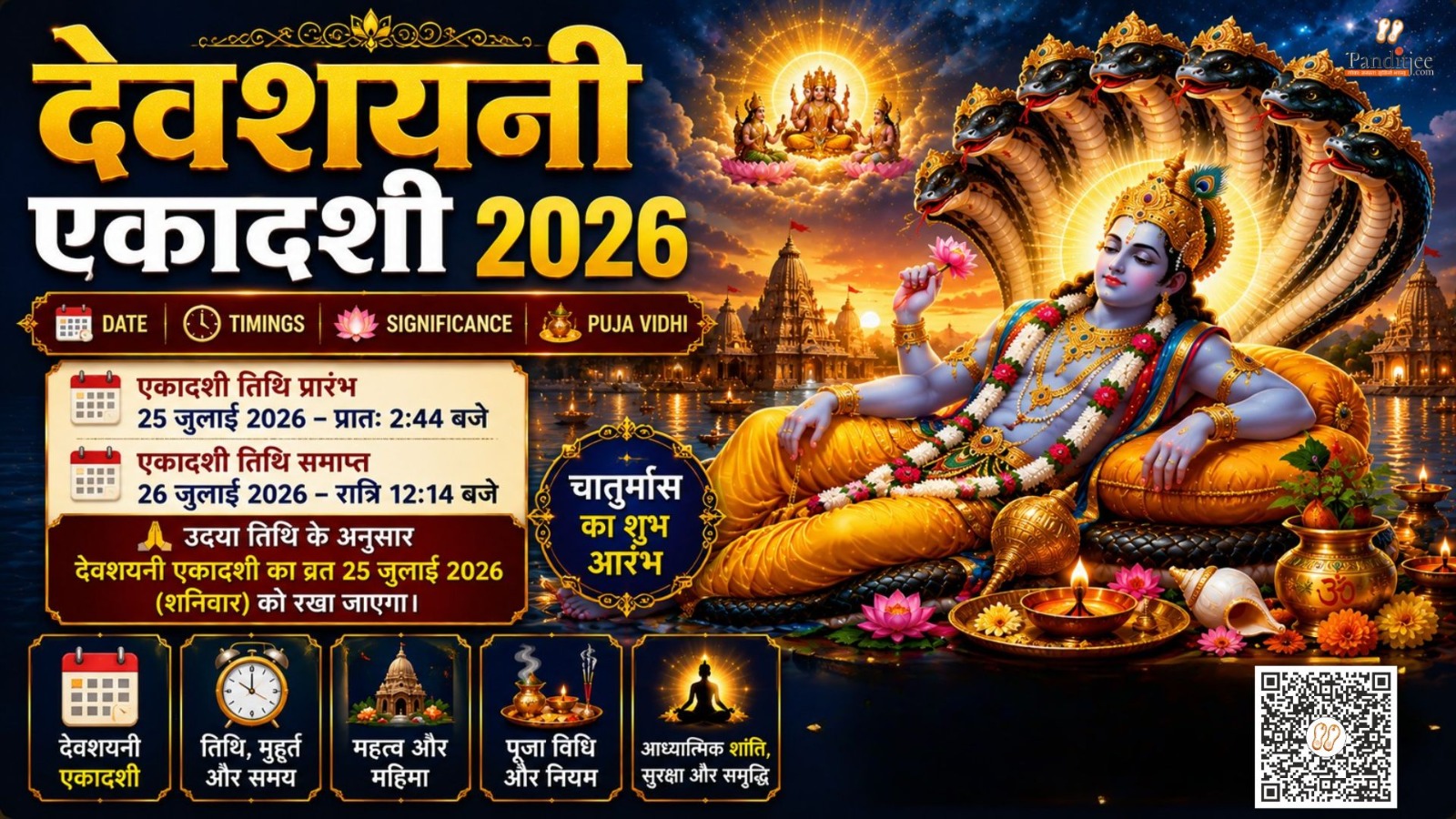
In 2026, Devshayani Ekadashi will be observed on Saturday, 25 July. According to Hindu beliefs, this is the day when Lord Vishnu enters Yoga Nidra (divine cosmic sleep) on the celestial serpent Sheshnag in Kshir Sagar. He is believed to awaken four months later on Prabodhini Ekadashi, marking the end of Chaturmas.
According to the Hindu Panchang, the Ekadashi Tithi begins at 2:44 AM on 25 July 2026 and ends at 12:14 AM on 26 July 2026. Since the Ekadashi Tithi prevails during sunrise on 25 July, devotees will observe the fast on this day.
Religious Significance of Devshayani Ekadashi
Devshayani Ekadashi holds immense religious importance because it marks the symbolic beginning of Lord Vishnu’s divine rest. The Sanskrit word “Devshayani” literally means “when the deity goes to sleep.”
According to the Padma Purana, Bhavishya Purana and several Vaishnava traditions, Lord Vishnu enters Yoga Nidra on this day while Goddess Lakshmi continues to serve Him. During these four months, devotees dedicate themselves to worship, charity, scriptural study and spiritual discipline.
The day reminds devotees that spiritual growth often requires periods of silence, introspection and self-restraint rather than constant external activity. For millions of devotees, Devshayani Ekadashi is not merely a fasting day but the beginning of a sacred spiritual journey.
Why Does Chaturmas Begin on Devshayani Ekadashi?
The observance of Chaturmas begins with Devshayani Ekadashi and concludes on Prabodhini Ekadashi in the month of Kartik. The word Chaturmas literally means “four months.”
These four months coincide with the monsoon season and have traditionally been regarded as an ideal period for spiritual practices. Ancient Hindu scriptures mention that sages and saints would avoid travelling during this time and instead remain at one place, engaging in meditation, religious discourses and guiding devotees.
Many Hindu families also observe personal vows during Chaturmas, such as daily prayer, chanting Vishnu Sahasranama, reading the Bhagavad Gita, practising charity, following a sattvic diet and giving up certain comforts as an act of self-discipline.
Since marriages, housewarming ceremonies and several other auspicious celebrations are generally avoided during Chaturmas, the period is viewed as one of devotion, simplicity and inner purification.
Devshayani Ekadashi 2026 Shubh Timings
According to the Panchang, the important timings for Devshayani Ekadashi are as follows:
Ekadashi Tithi Begins: 2:44 AM on 25 July 2026
Ekadashi Tithi Ends: 12:14 AM on 26 July 2026
Devotees observe the Ekadashi fast on 25 July, while the fast is traditionally concluded on Dwadashi during the prescribed Parana Muhurat after sunrise.
Devshayani Ekadashi Puja Vidhi
Devotees wake up during Brahma Muhurat, take a holy bath and wear clean or traditional clothes before beginning the worship of Lord Vishnu.
The place of worship is cleaned thoroughly, after which an idol or picture of Lord Vishnu is installed. A ghee lamp and incense sticks are lit, symbolising the removal of ignorance and the arrival of divine blessings.
Lord Vishnu is offered Tulsi leaves, yellow flowers, fruits, sweets and Panchamrit. Tulsi occupies a special place in Vishnu worship and is considered indispensable during the puja.
During the worship, devotees chant sacred mantras such as “Om Namo Bhagavate Vasudevaya” and “Om Namo Narayanaya.” Many also recite Vishnu Sahasranama, passages from the Bhagavad Gita, Vishnu Stotras and perform Vishnu Aarti with devotion.
The worship concludes with prayers for peace, prosperity, spiritual progress and the welfare of the family.
Devshayani Ekadashi Vrat Rules
Fasting is considered one of the most important observances of Devshayani Ekadashi. The form of fasting varies according to family traditions, regional customs and individual health.
Some devotees observe a strict Nirjala Vrat, while others consume only fruits, milk or Ekadashi-approved foods. Grains, cereals, rice, pulses, onion, garlic, non-vegetarian food and intoxicants are generally avoided.
The fast is completed on the following day, Dwadashi, by observing the prescribed Parana after offering prayers to Lord Vishnu.
Importance of Charity on Devshayani Ekadashi
Charity occupies a significant place in the observance of Devshayani Ekadashi. Hindu scriptures emphasise that helping those in need enhances the spiritual merit of the day.
Many devotees donate food, clothes, fruits, drinking water and other essential items to the poor. Supporting temples, feeding cows and serving saints are also regarded as highly auspicious acts during this period.
The spirit of charity reflects the deeper message of compassion and selflessness associated with Lord Vishnu’s teachings.
Spiritual Importance of Chaturmas
Chaturmas is often regarded as a season of inner transformation rather than external celebrations. Devotees use these four months to cultivate patience, devotion, meditation and disciplined living.
Many spiritual teachers encourage people to use this sacred period for daily prayer, scriptural study, meditation, service to society and self-reflection. It is believed that sincere spiritual practices performed during Chaturmas yield lasting positive changes in one’s life.
According to Vedic astrologers, this period encourages individuals to focus on personal growth, mental clarity and spiritual progress instead of material pursuits. While these beliefs are rooted in Hindu tradition and faith, they continue to inspire millions of devotees across generations.
Spiritual Message of Devshayani Ekadashi
Devshayani Ekadashi teaches that true progress begins from within. Lord Vishnu’s symbolic Yoga Nidra reminds devotees that periods of silence, contemplation and discipline are essential for lasting growth.
The festival inspires people to strengthen their faith, practise compassion, remain truthful, cultivate humility and dedicate themselves to righteous living. Rather than seeking only worldly success, it encourages balance between material responsibilities and spiritual wisdom.
Conclusion
Devshayani Ekadashi, observed on 25 July 2026, marks the sacred beginning of Chaturmas and is one of the most spiritually significant days dedicated to Lord Vishnu. Through fasting, prayer, charity and self-discipline, devotees seek divine blessings, inner peace and spiritual elevation.
Whether observed with elaborate rituals or simple devotion at home, Devshayani Ekadashi offers an opportunity to pause from worldly distractions and reconnect with faith, values and inner consciousness.
If you wish to perform Devshayani Ekadashi Puja, Vishnu Sahasranama Path, Satyanarayan Katha or other Vishnu-related rituals, you can connect with experienced Vedic priests through the Panditjee App for authentic guidance and personalized puja services.