Blog
Narasimha Jayanti 2026: A Powerful Day to Overcome Fear and Invite Divine Protection

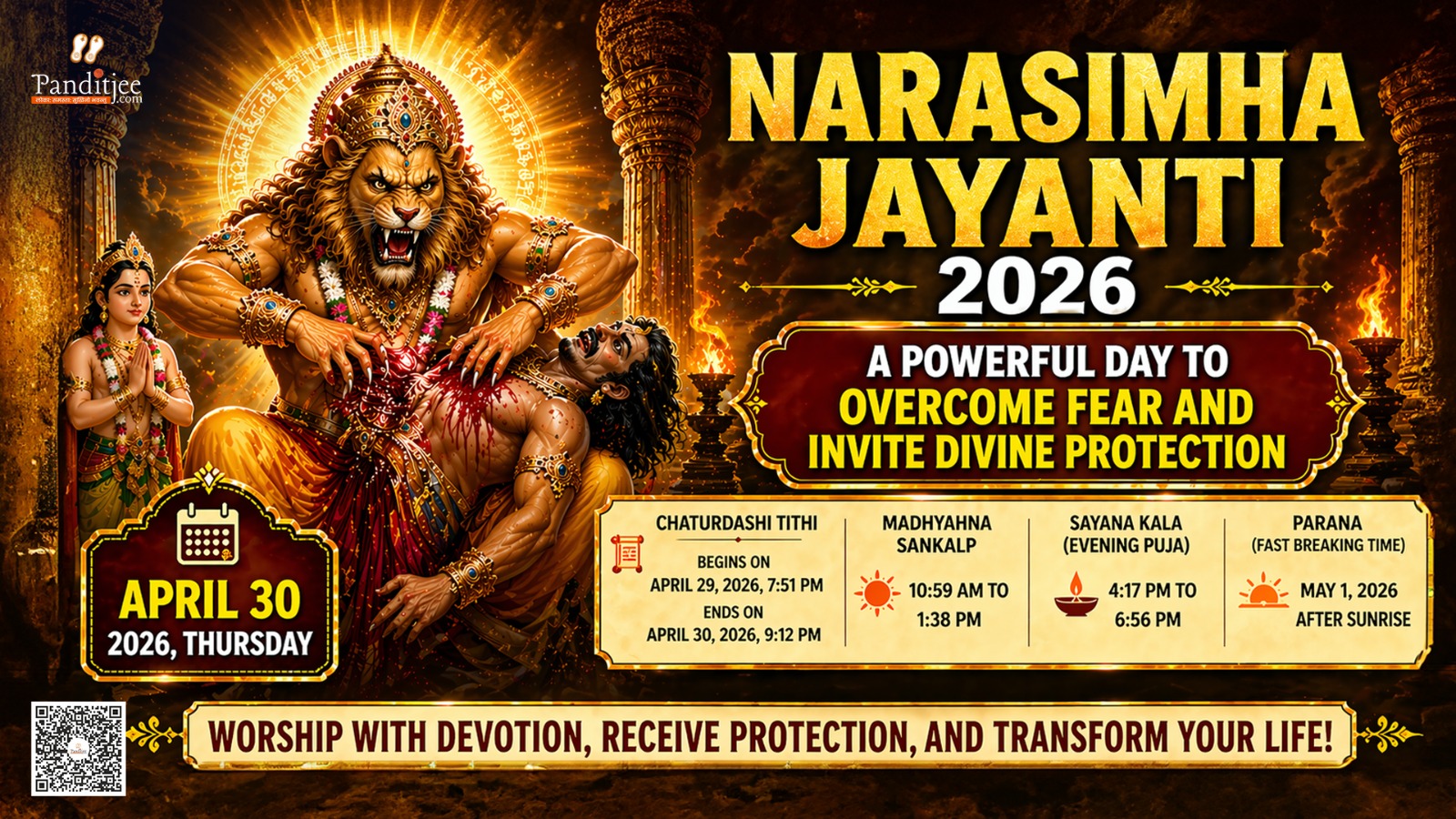
Narasimha Jayanti is one of the most powerful and spiritually significant festivals in Hinduism, dedicated to Lord Narasimha, the fourth incarnation of Lord Vishnu. This sacred day marks the divine appearance of the half-man, half-lion avatar who emerged to protect his devoted follower Prahlada and destroy the demon king Hiranyakashipu. In 2026, Narasimha Jayanti will be celebrated on April 30.
According to the Hindu calendar, the Chaturdashi Tithi begins on April 29, 2026, at 7:51 PM and ends on April 30, 2026, at 9:12 PM. The Madhyahna Sankalp time will be from 10:59 AM to 1:38 PM, while the evening puja (Sayana Kala) will take place from 4:17 PM to 6:56 PM. The fast is typically broken the next day, May 1, after sunrise.
Narasimha Jayanti holds deep spiritual meaning and teaches that divine protection always comes to those who have unwavering faith. Lord Narasimha’s form itself is unique and symbolic—neither fully human nor animal, appearing at twilight, and acting in a way that upheld divine justice while bypassing the boon granted to the demon.
The story behind Narasimha Jayanti is both powerful and inspiring. Hiranyakashipu, a demon king, had received a boon that made him nearly invincible—he could not be killed by man or beast, during day or night, inside or outside, or by any weapon. Blinded by arrogance, he demanded that everyone worship him, including his own son Prahlada.
However, Prahlada remained a devoted follower of Lord Vishnu. Enraged by his son’s devotion, Hiranyakashipu tried multiple times to kill him, but failed each time. Finally, Lord Vishnu appeared as Narasimha—at dusk (neither day nor night), on a threshold (neither inside nor outside), and killed the demon using his claws (neither weapon nor tool). This divine act symbolizes that truth and devotion always triumph over evil and arrogance.
On Narasimha Jayanti, devotees observe fasting and engage in prayers and worship. The fasting rules are similar to Ekadashi, where grains and cereals are avoided. Some devotees observe a strict fast, while others consume fruits or light satvik food. The focus is on purity, discipline, and devotion.
Devotees wake up early, take a bath, and clean their surroundings. A simple puja setup with an idol or image of Lord Narasimha is sufficient. Offerings such as flowers, fruits, incense, and sweets are presented. Chanting powerful mantras like “Om Namo Bhagavate Narasimhaya” or reciting Vishnu Sahasranama enhances spiritual energy and creates a peaceful environment.
Evening time is considered the most important for Narasimha Jayanti puja, as it is believed to be the time of Lord Narasimha’s appearance. Performing puja during this period brings special blessings. Many devotees also stay awake at night, engaging in prayers and devotional singing.
Narasimha Jayanti is especially significant for those dealing with fear, stress, or uncertainty in life. Worshipping Lord Narasimha is believed to remove fear, protect from negative energies, and bring courage and confidence. His fierce yet protective form reminds devotees that divine power always stands with righteousness.
This sacred day is not just about rituals but also about inner transformation. It encourages individuals to stay strong in their faith, remain calm during challenges, and trust that divine help will come at the right time.
Narasimha Jayanti is a celebration of faith, courage, and divine protection. Observing this day with sincerity and devotion can bring peace, strength, and spiritual growth into one’s life.
If you are looking for personalized guidance related to vrat, puja, or kundli, you can connect with experienced pandits through the Panditjee App for authentic spiritual assistance.
👉 Download here: https://play.google.com/store/apps/details?id=com.panditjee.app