
Blog
Who is Maa Shailaputri? Story of Navratri Day 1 Goddess and Her Significance

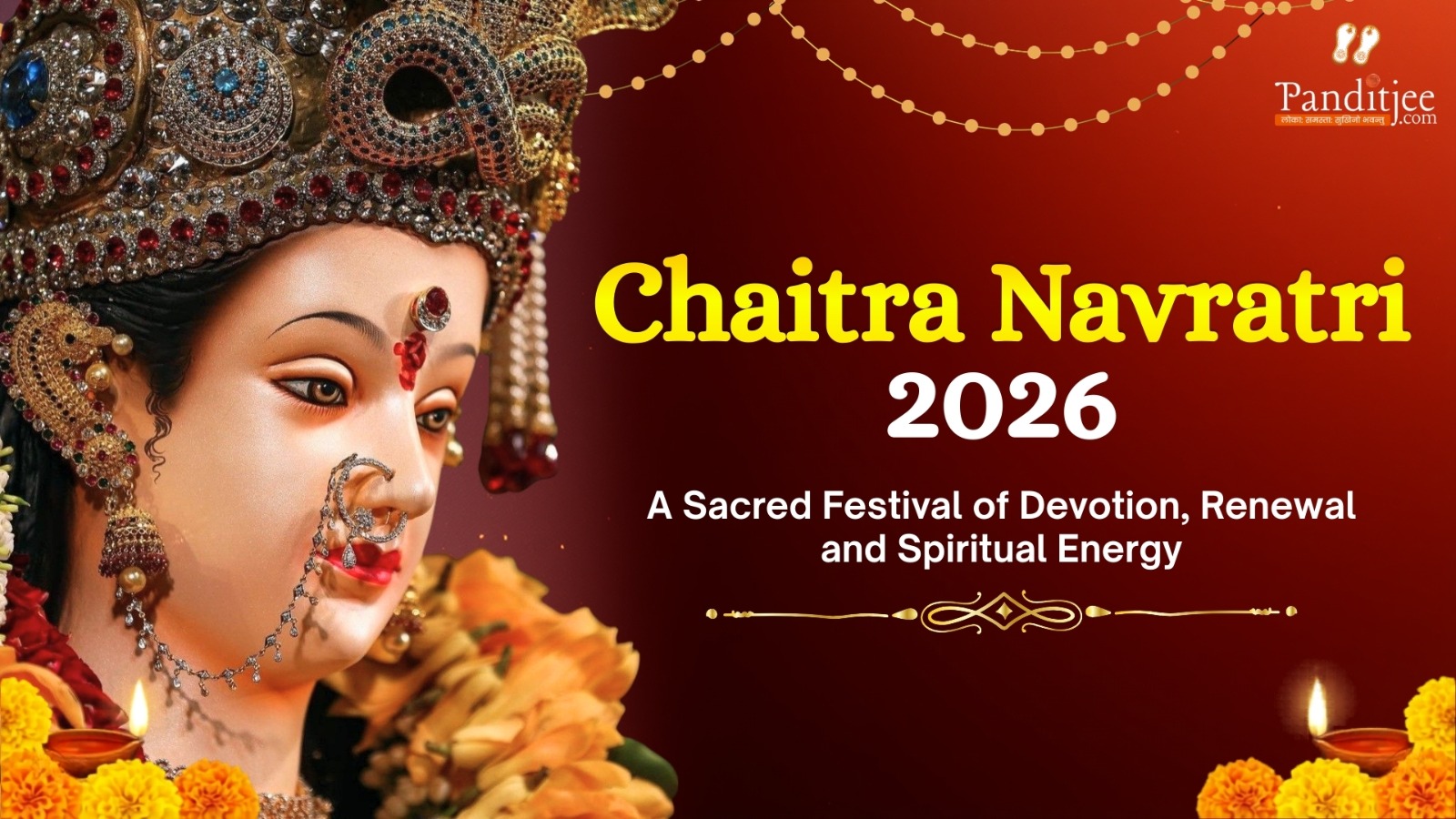
Navratri begins with the worship of Maa Shailaputri, the first form among the Navadurga. Her name comes from two Sanskrit words — “Shaila” meaning mountain and “Putri” meaning daughter — making her the Daughter of the Mountain King, Himalaya.
Maa Shailaputri is considered a powerful form of Goddess Parvati, the divine consort of Lord Shiva and the mother of Lord Ganesha and Lord Kartikeya. She rides the sacred bull Nandi, holding a trident (Trishul) in one hand and a lotus in the other, symbolizing strength, purity, and devotion.
Devotees worship Maa Shailaputri on the first day of Navratri to seek strength, stability, and spiritual awakening for the journey ahead. Chanting her sacred mantra with devotion is believed to invoke her divine blessings.
Maa Shailaputri Beej Mantra:
Om Devi Shailaputryai Namah॥
Dhyana Mantra:
Vande Vanchhitalabhaya Chandrardhakritashekharam
Vrisharudham Shooldharam Shailaputrim Yashasvinim॥
The Story Behind Maa Shailaputri
Before taking birth as Shailaputri, the Goddess was born as Devi Sati, the daughter of King Daksha Prajapati, one of the sons of Lord Brahma.
Although Sati deeply loved Lord Shiva and chose him as her husband, her father Daksha strongly disapproved of the marriage. Daksha believed Shiva, an ascetic living on Mount Kailash, was not worthy of his royal daughter. Despite his objections, Sati married Shiva and began living with him at Kailash Parvat.
Some time later, Daksha organized a grand Yagna (sacred ritual) and invited all the Gods and divine beings. However, out of pride and resentment, he deliberately chose not to invite Lord Shiva and Sati.
When Sati learned about the Yagna being held at her father’s palace, she wished to attend. Shiva advised her not to go, reminding her that they had not been invited and might be insulted. But Sati felt it was her right to visit her parental home and decided to go.
When she arrived, she found that most of her relatives ignored her presence. Only her mother, Prasuti, welcomed her with affection. To make matters worse, Daksha publicly insulted Lord Shiva in front of the gathered guests.
Unable to bear the humiliation of her husband and the disrespect shown to her, Sati was overcome with grief and anger. In deep sorrow, she immolated herself in the sacred fire of the Yagna, sacrificing her life.
Shiva’s Wrath and the Origin of Shakti Peethas
When Lord Shiva heard of Sati’s death, he was filled with immense grief and rage. In his fury, he created Veerbhadra, a powerful and terrifying form, and sent him to destroy Daksha’s Yagna.
Veerbhadra stormed the ceremony, destroyed the Yagna, and beheaded King Daksha.
Overwhelmed with sorrow, Shiva carried Sati’s lifeless body and wandered across the universe in grief. As he moved, parts of Sati’s body fell at different places across the Indian subcontinent. These sacred locations later became known as the Shakti Peethas, revered temples dedicated to the Divine Feminine.
According to tradition, there are 52 sacred Shakti Peethas.
Eventually, Lord Vishnu intervened to restore balance. Daksha was brought back to life, with the head of a ram attached to his body, and he was able to complete the Yagna with humility.
Birth of Maa Shailaputri
In her next incarnation, the Goddess was reborn as the daughter of Himalaya, the King of Mountains. She was named Shailaputri, and is also known as Parvati and Hemavati.
In this life as well, she performed deep penance and eventually reunited with Lord Shiva, restoring the divine union of Shiva and Shakti.
Significance of Worship
Worshipping Maa Shailaputri on the first day of Navratri symbolizes the beginning of the spiritual journey. She represents strength, purity, and the grounding energy of nature, inspiring devotees to start Navratri with devotion and determination.
Through platforms like PanditJee, devotees can easily book experienced Purohits and perform Navratri Pujas with proper rituals, ensuring that every prayer is conducted with authenticity and devotion.
पंडितजी ऐप डाउनलोड करेंhttps://play.google.com/store/apps/details?id=com.cliqindia.pandit_jee_app&hl=en_IN
